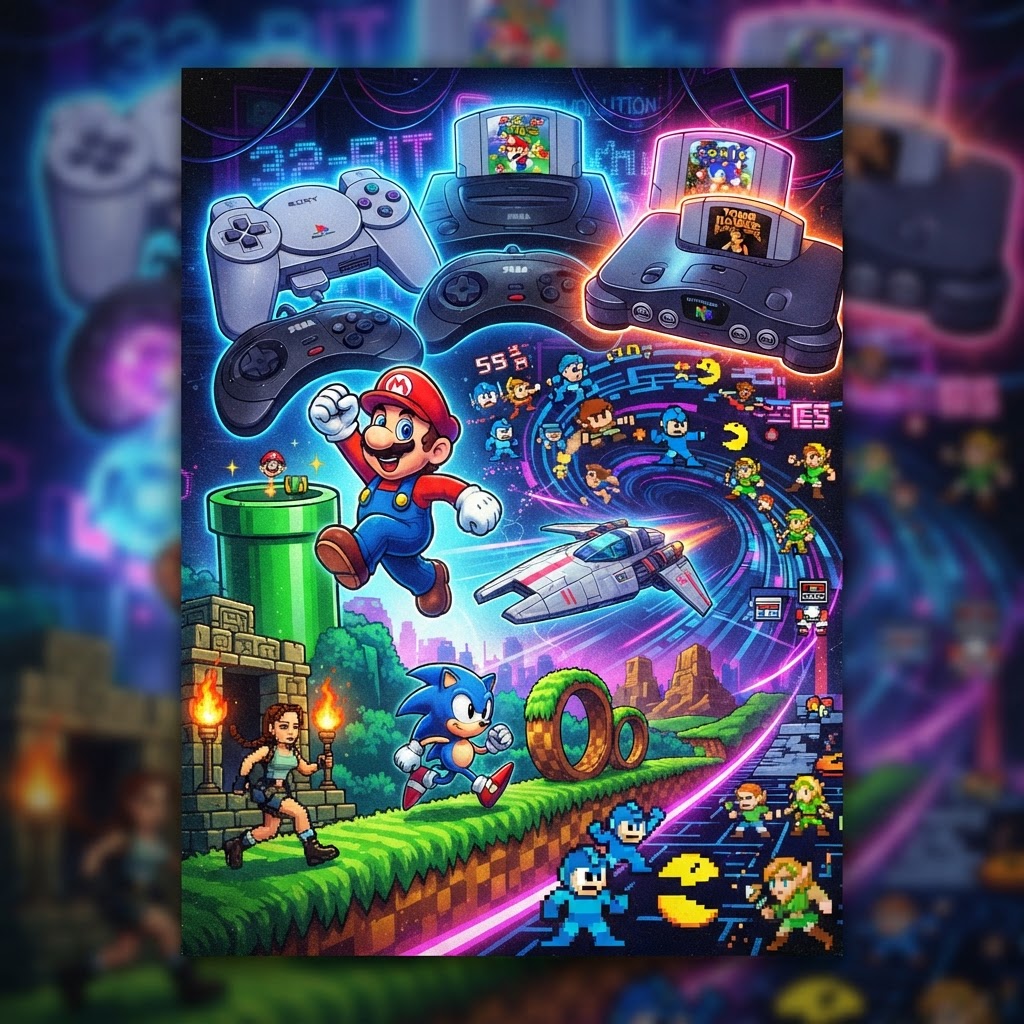
The Great Migration: From Pixels to Polygons
Before the mid-1990s, gaming was a game of limitations. You moved left, you moved right, and you jumped over pits. But when the 32-bit generation—led by the Sony PlayStation and the Sega Saturn—hit the scene, the "rules" of play shifted overnight. This wasn't just a bump in power; it was a shift in perspective.
Developers were no longer constrained by tile-based backgrounds. They were suddenly tasked with building entire worlds. This era gave us the cinematic scope of Final Fantasy VII, the intricate platforming of Super Mario 64, and the haunting isolation of the original Resident Evil. It was the moment gaming grew up, trading the "arcade-style" high score chase for deep, narrative-driven experiences that lasted dozens of hours.
Why 32-Bit Architecture Still Matters Today
Why are we still talking about this era thirty years later? Because it established the fundamental design language of modern gaming. The 32-bit era invented the 360-degree camera, complex 3D asset streaming, and the integration of pre-rendered cinematic cutscenes.
For those of us still diving back into these classics, the transition is jarring but magical. If you are setting up your own dedicated space to revisit these gems, you’ll find that today’s modern displays often struggle with the lower resolution of original hardware. Using a Premium CRT-Style Gaming Monitor can make a world of difference, as it allows those early polygons to blend more naturally, softening the "sharp edges" that modern LCDs tend to over-emphasize.
Building the Ultimate Retro Sanctuary
The 32-bit era was defined by hardware aesthetic. Whether it was the iconic gray chassis of the PlayStation or the sleek, sharp lines of the Saturn, these consoles were designed to look like "serious" tech rather than toys.
When displaying these machines, organization is key to preserving their longevity. A Gaming Console Shelf Riser is an essential tool for any collector, helping to manage airflow around your hardware and keeping your console collection accessible and visually organized. By elevating your hardware, you aren't just protecting your gear—you’re turning your game room into a museum-quality display that honors the machines that changed the world.
The Cultural Legacy of the 32-Bit Generation
Beyond the technical specs, the 32-bit era changed what we played. The inclusion of CD-ROM storage meant games could finally feature orchestral soundtracks and full-motion video (FMV). This was the birth of the "blockbuster" game.
We saw genres like the survival horror, the 3D action-adventure, and the cinematic RPG become industry standards. The industry proved that games could be high art, capable of moving players to tears or keeping them on the edge of their seats with tense, atmospheric storytelling. This shift pushed the medium into the mainstream, turning gaming from a niche hobby into a global cultural phenomenon that rivaled Hollywood.
How to Keep the 32-Bit Legacy Alive
Revisiting these titles today requires a bit of patience and the right setup. The controllers of the mid-90s were often experimental, and after decades of use, your original pads might feel a bit loose or unresponsive. If you find your analog sticks drifting, simple upgrades like Controller Thumbstick Grips can drastically improve your precision and comfort during those long, nostalgic marathon sessions.
The jump to 32-bit was a leap of faith for developers, but it paved the way for every open-world title and cinematic experience we enjoy today. The textures may have been pixelated and the frame rates occasionally stuttered, but the ambition of the 32-bit era was truly limitless.
Whether you are dusting off your original hardware or picking up a modern tribute device to experience these classics for the first time, take a moment to appreciate the foundation laid by these trailblazing consoles. To truly get the most out of your modern retro setup, consider picking up a Premium CRT-Style Gaming Monitor today and see the 32-bit revolution exactly as the developers intended.