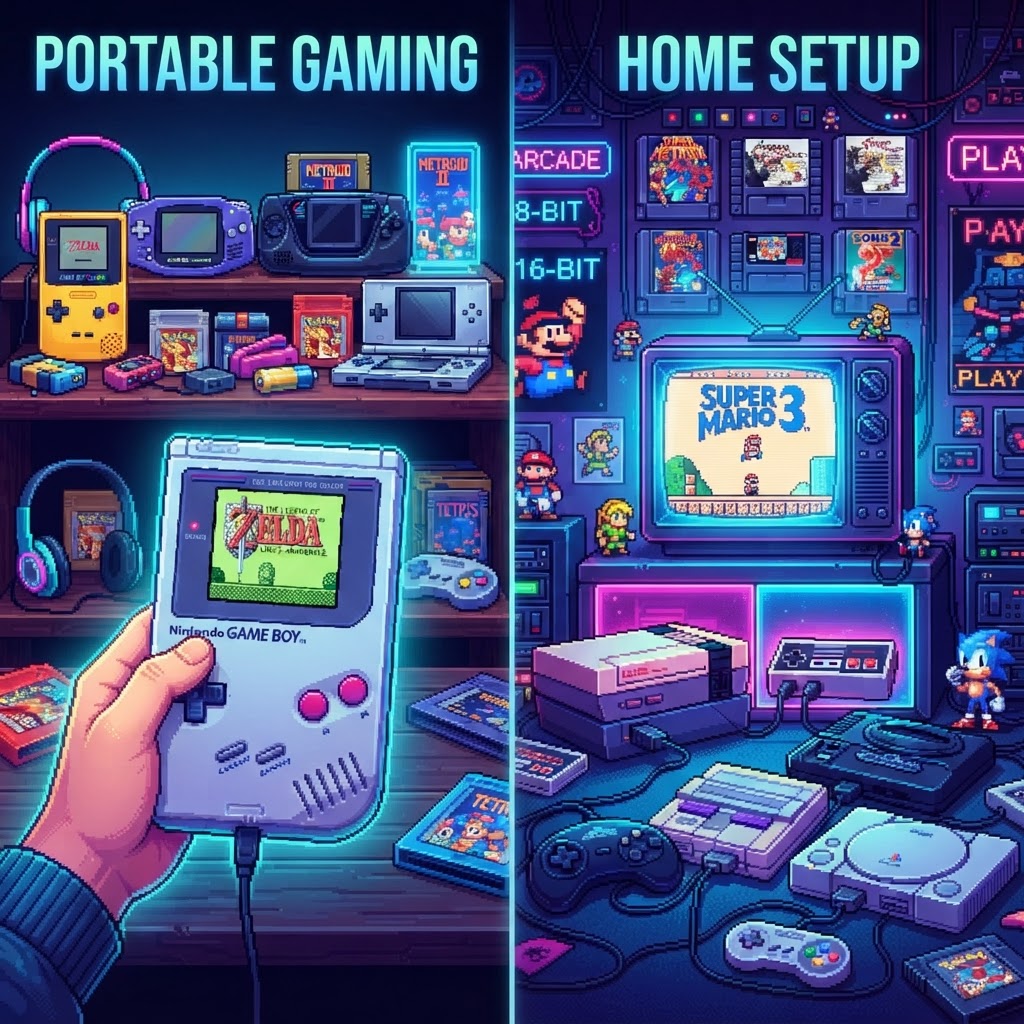
Why Portability Changes Everything for Retro Game Collectors
Most guides on identifying valuable retro games assume you're sitting at home with a full setup, plenty of time, and a stable internet connection. But the reality of retro game collecting is messier and more exciting than that. You're at a garage sale at 7 a.m., phone signal is weak, and someone just dropped a dusty box of SNES cartridges in front of you. Do you know what to grab?
This guide focuses on that exact tension: what you can assess on the go versus what needs a home setup to verify properly. Mastering both sides will dramatically sharpen your instincts and protect your wallet.
On-the-Go Identification: What You Can Check Without Any Equipment
1. Learn the High-Value Labels and Publishers by Heart
Before anything else, train your eyes. Certain publishers are almost always worth a second look:
- Nintendo first-party titles (especially late-run NES, SNES, and N64)
- Atlus, Working Designs, and Enix on PlayStation and Saturn — these publishers had low print runs and massive cult followings
- SNK on Neo Geo AES — cartridges alone can fetch hundreds or thousands
When you're out hunting, you don't need a price guide if you've internalized the key names. Square's Final Fantasy series, Konami's late-era NES titles, and Capcom's Mega Man games are broadly valuable — but it's the obscure RPGs and strategy titles with tiny print runs that truly spike in value.
2. Check the Label Condition and Authenticity Fast
A valuable cart with a damaged label loses significant resale and collector value. Scan for:
- Fading, water damage, or peeling — even slight damage on a rare title matters
- Marker writing — kids' names written in Sharpie tank value
- Reproduction stickers — often slightly too bright, wrong font, or missing copyright text
Counterfeit cartridges are rampant, especially for popular titles like EarthBound, Chrono Trigger, and Pokémon games. On the go, check the screw type (authentic SNES carts use proprietary security screws, not standard Phillips), weight (fakes are often lighter), and label text for subtle font errors.
Once you're home, a deeper clean and inspection is essential. A Game Cartridge Cleaning Kit lets you safely remove grime and corrosion to properly read board markings — one of the most reliable ways to spot a reproduction.
3. Use Mobile Price Tools Strategically
Apps like PriceCharting (available as a mobile-friendly site) let you scan barcodes or search titles instantly. The catch: signal-dependent and slow in crowded areas. Build a mental shortlist of "always investigate" titles and use the app to confirm borderline cases rather than every single cartridge.
Home Setup Verification: Going Deeper on Suspected High-Value Finds
Once you're back home with a haul, your stationary setup becomes your authentication lab.
4. Open the Cartridge and Read the Board
This is the gold standard for authentication. You'll need a security bit screwdriver to open cartridges (GameBit for NES/SNES/N64, Tri-Wing for GBA). Inside, look for:
- Date codes on the PCB that match the game's known manufacturing period
- Nintendo or manufacturer stamps
- Single vs. multiple chips — many reproductions use a single modern chip instead of multiple period-correct chips
A Game Cartridge Battery Replacement Kit is invaluable here too. Many high-value RPGs (think EarthBound, The Legend of Zelda, Pokémon Gold/Silver) rely on internal save batteries. A dead battery doesn't kill value, but it's something serious buyers will ask about — and replacing it yourself adds real appeal to your collection or resale listings.
5. Test on Your Display Setup
Authenticity isn't just about the board — it's about playability and presentation. If you're showcasing a valuable find, how it looks on screen matters to buyers and fellow collectors.
For a proper home display, a Component to HDMI Converter lets you run classic consoles through modern screens without signal loss or color degradation — critical when you're recording footage or photographing a game for sale. If you're serious about authentic visuals, a Premium CRT-Style Gaming Monitor replicates the scanline aesthetic that many collectors and buyers expect, and it makes your collection photos stand out.
6. Cross-Reference Sealed vs. Loose vs. Complete-in-Box Pricing
Value varies enormously based on condition tier:
| Condition | Description | Typical Value Multiplier | |---|---|---| | Loose | Cart only, no box or manual | 1x baseline | | CIB | Cart + box + manual | 3–8x loose | | Sealed | Factory sealed, graded | 10–50x+ loose |
A loose Chrono Trigger SNES cart might sell for $80–$120. A sealed, graded copy has sold for over $20,000. Knowing these tiers on the fly helps you make fast purchasing decisions.
The Portable Collector's Toolkit: What to Carry
When you're out hunting, keep it light but effective:
- Smartphone with PriceCharting bookmarked
- Small flashlight to check label details in dark bins
- GameBit screwdriver (compact versions fit in a jacket pocket)
- Reference photo folder on your phone of known-good vs. fake board photos
At home, your toolkit expands significantly — cleaning kits, display equipment, and proper lighting for photography all contribute to verifying and presenting your finds.
Community and Ongoing Education
Retro game collecting has a rich social layer. Online forums like NintendoAge (now archived but searchable), Reddit's r/gamecollecting, and VGPC Discord servers are treasure troves of authentication help. Post your finds, share board photos, and tap the community's collective knowledge.
Even when you're away from screens entirely, a Retro Gaming Card Game is a fun way to keep your knowledge of classic titles sharp — great for game nights with fellow collectors who double as informal advisors.
Conclusion: Build Both Skills, Win More Finds
The best retro game collectors are fluent in both worlds: fast, instinct-driven decisions at the source, and meticulous home verification before committing to value. Neither skill works without the other.
Start by memorizing the key publishers and authentication tells you can check in seconds. Then invest in a solid home setup — beginning with a Game Cartridge Cleaning Kit — to turn rough finds into verified, presentable pieces of collection history. The games are out there. Now you'll know exactly which ones are worth taking home.