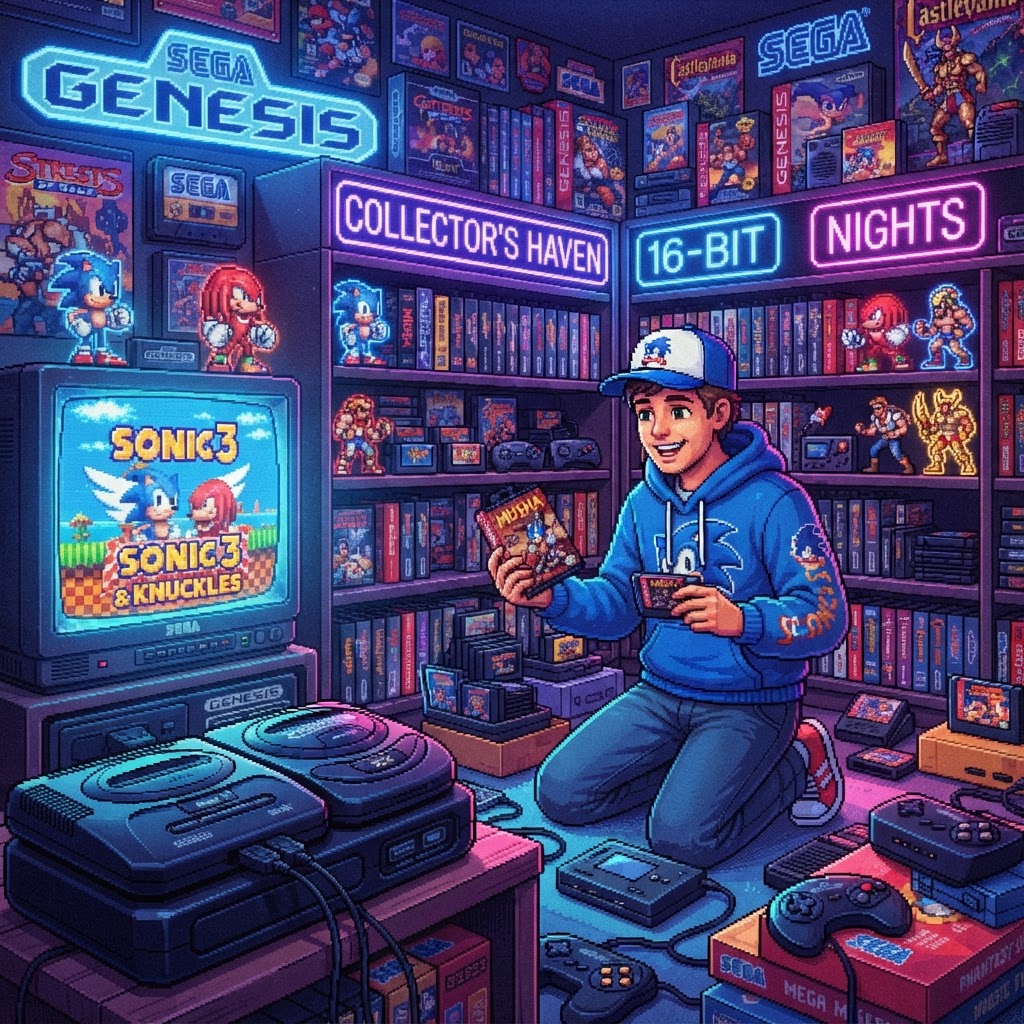
You don't need another article telling you to "pick up a copy of Gunstar Heroes." You already know. What you probably don't have yet is a properly optimized display chain for RGB output, a strategy for hunting regional variants, and a workspace that treats your collection with the respect it deserves. This guide is written for collectors who are past the entry point and ready to go further — into the hardware nuances, the shelf upgrades, and the rare titles that actually move the needle.
Why Display Quality Is the Most Underrated Part of a Genesis Collection
The RGB Signal Problem Most Collectors Ignore
The Sega Genesis (all three major hardware revisions) outputs a native RGB signal that is dramatically cleaner and more vibrant than the composite connections most people default to. If you're running composite into a flatscreen and wondering why your Genesis games look muddy and washed out, the signal chain is your problem — not your TV, and not your cartridges.
The Model 1 VA3 and earlier revisions output the sharpest RGB signal of the entire Genesis family, with the Model 2 being nearly as clean. To take advantage of this, you need either a proper SCART setup routed into an upscaler (like the Retrotink 5X or OSSC) or a monitor that natively handles the signal.
For collectors who want a dedicated display solution without deep-diving into upscaler rabbit holes, a Premium CRT-Style Gaming Monitor can replicate the scanline aesthetics of original CRT output while fitting cleanly into a modern desk setup. Look for options that support 240p passthrough or scanline simulation — these are non-negotiable features if you want the authentic visual feel of early-90s Genesis gameplay.
The Regional Variant Hunt: What Serious Collectors Actually Target
Mega Drive vs. Genesis: It's Not Just a Name Difference
The PAL Mega Drive library contains dozens of titles that were either never released in North America or saw significantly altered versions stateside. Japanese Mega Drive cartridges are region-locked but physically compatible with modification, and many Japanese-exclusive titles — particularly RPGs and arcade ports — are among the most visually impressive software on the platform.
Key regional targets worth hunting:
- Mega Drive Aleste (Japan) — a shooter that outpaces most NA Genesis shmups technically
- Pulseman (Japan) — developed by Game Freak before Pokémon; never had a physical NA release until recently
- Eliminate Down (Japan) — one of the rarest and most expensive Genesis/Mega Drive cartridges in existence, routinely fetching $400–$1,000 in complete condition
- Alien Soldier (Japan/EU) — available in PAL territories and far cheaper than the NA reproduction market suggests it should be
Building a multi-region collection requires either a region-modified console or a region switch installation. Both are well-documented modifications that don't require advanced soldering on the Model 2.
Hardware Variants Worth Owning (Beyond the Standard Three)
The 32X and Sega CD: Undervalued Today, Historically Essential
The 32X and Sega CD have been dismissed as failed add-ons for decades, but serious Genesis historians treat them as essential parts of understanding the platform's full arc. The Sega CD in particular has a legitimately strong library if you know where to look — Snatcher, Lunar: The Silver Star, Popful Mail, and Vay are RPG experiences you simply cannot replicate elsewhere in the Genesis ecosystem.
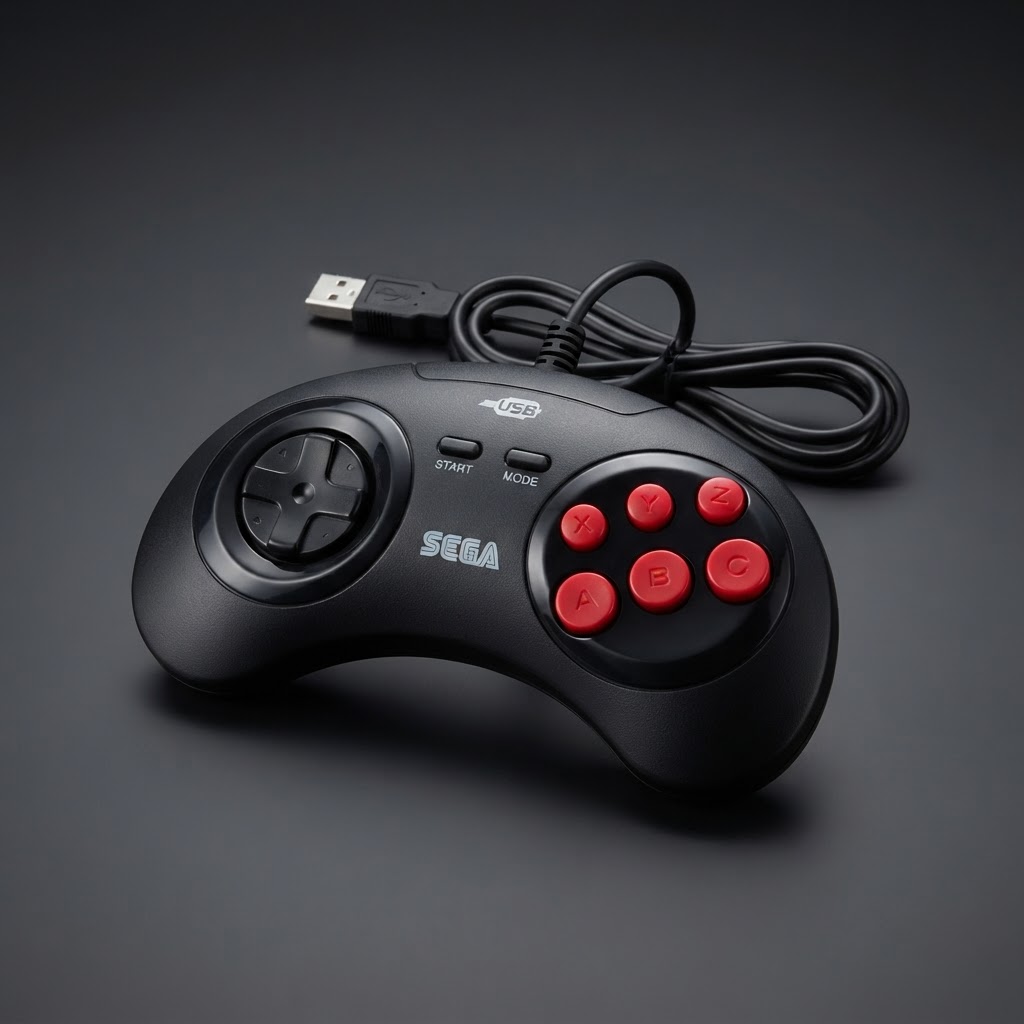
For display and connectivity on these multi-component setups, Controller Extension Cables become genuinely useful. The Genesis controller port is a standard DB9 connector, and extension cables allow you to sit comfortably back from your display without dealing with the notoriously short OEM cable length — a real quality-of-life upgrade when you're running a Model 1 + Sega CD stack that needs to sit close to your TV stand.
Building a Collection-Worthy Display Space
Your Setup Should Respect the Collection
A serious Genesis collection deserves a serious environment. Dust and static are the enemies of cartridge contacts and console longevity. Keeping your display area clean isn't optional — a Retro Console Screen Cleaning Cloth should be part of your regular maintenance routine. Use it on cartridge labels, console shells, and monitor screens. Microfiber cloths designed for electronics avoid the micro-scratches that damage label printing on CIB (complete-in-box) copies.
For the overall room aesthetic, collectors who take presentation seriously are increasingly investing in dedicated gaming rooms or display corners. Retro Gaming Wall Decals offer a cost-effective way to build thematic context around your shelf — Genesis-era pixel art and Sonic iconography translate well to wall decals and signal to anyone walking into the room that this is a curated space, not just clutter on a shelf.
If you want to go further with the full environmental setup, an RGB Retro Gaming Desk Setup Bundle can anchor the desk area where you do most of your active play. Ambient lighting that complements your monitor's color output makes extended play sessions more comfortable and gives your streaming or photography setup a polished look if you document your collection online.
The Software Tiers Most Collectors Haven't Mapped Yet
Beyond the Top 50: The $20–$80 Hidden Gem Tier
The most interesting collecting territory right now isn't the $500+ grails — it's the middle market. Games in the $20–$80 complete-in-box range that are genuinely excellent but haven't yet been amplified by YouTube retrospectives or mainstream retro press coverage. Examples:
- Ranger X — a mech action game with parallax scrolling that pushes Genesis hardware surprisingly hard
- Sub-Terrania — brutally difficult but technically impressive; loose copies remain affordable
- Panorama Cotton — a Japan-exclusive pseudo-3D shooter with production values that shouldn't exist on the hardware
- Twinkle Tale — undervalued ARPG/shooter hybrid; the Japanese cartridge is still attainable under $100 in most markets
This tier moves. Prices on games like these have historically doubled within 18–24 months of mainstream coverage. Cataloging and acting on this tier before the price curves spike is what separates a collector from a buyer.
Maintenance, Longevity, and Keeping Your Hardware Running
Genesis hardware is now 30+ years old. Capacitor degradation, dirty cartridge contacts, and laser assembly wear (on Sega CD units) are the three most common failure modes. Budget-level maintenance steps every collector should have standardized:
- Recap your Sega CD — electrolytic capacitors on Model 1 and Model 2 Sega CD units are notorious for leaking; recapping kits are widely available and the repair is beginner-accessible
- Clean cartridge contacts with IPA — 90%+ isopropyl alcohol on a cotton swab, let dry fully before reinsertion
- Store cartridges vertically — horizontal stacking puts pressure on label edges over time
Conclusion: Build With Intention
The difference between a Sega Genesis collection that's impressive and one that's genuinely authoritative comes down to intentionality — in your display chain, your regional coverage, your hardware variants, and your maintenance habits. You don't need every game. You need the right games, presented correctly, in working condition.
Start by locking down your display setup: a Premium CRT-Style Gaming Monitor gives you the visual fidelity your collection deserves without the fragility of hunting a working CRT. From there, let the regional variants and hidden gem tier fill in the gaps. This is a long game — play it deliberately.