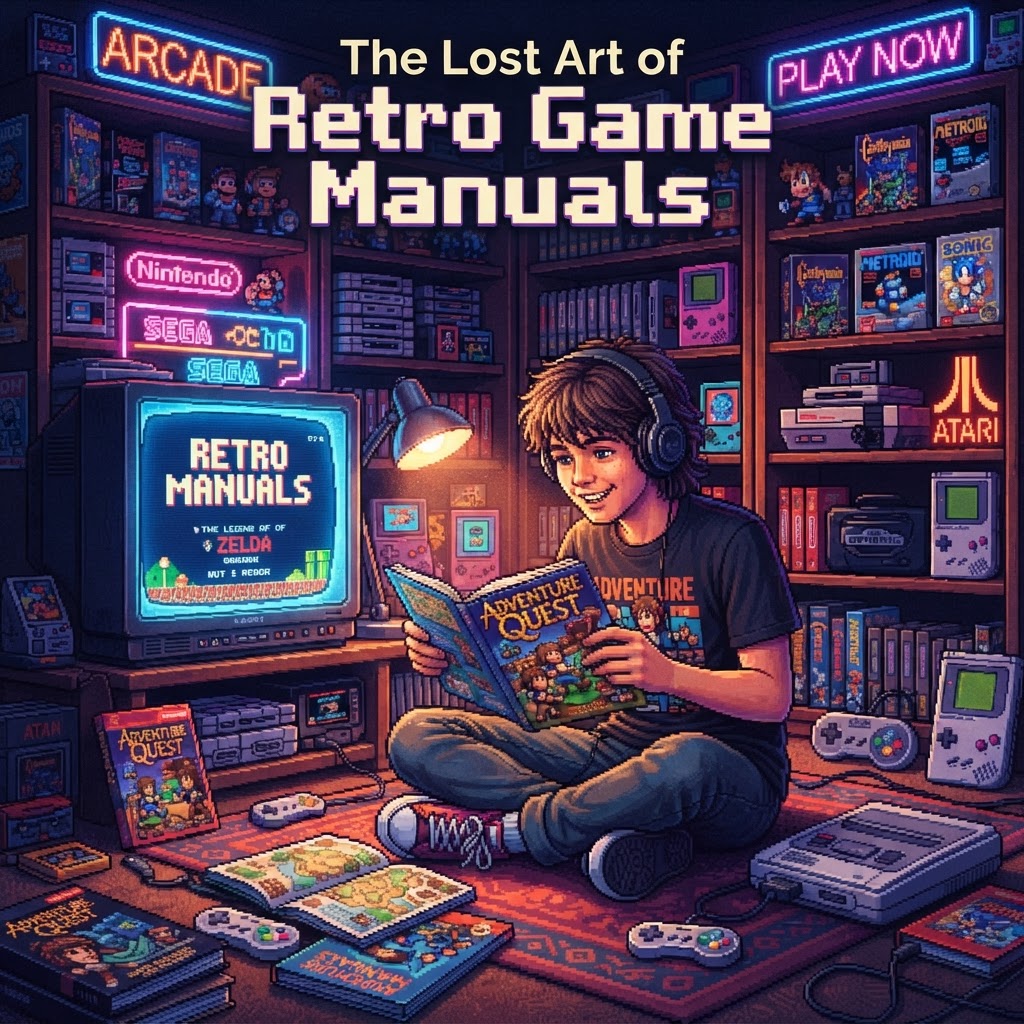
For any gamer who grew up in the 80s or 90s, the experience of a new game began long before the power button was pressed. It started the moment you cracked the seal on a fresh cardboard box. You weren’t just buying code; you were buying a ritual. You’d pull out the crisp, glossy manual, breathe in that distinct scent of printed ink, and study the lore-rich pages while the cartridge slid into your console. Today, that experience has been replaced by cold, digital downloads, turning the "game manual" into a lost art form.
Why Manuals Were the Heart of Retro Gaming
In the era of the NES, SNES, and Genesis, developers couldn't fit vast tutorials into the game itself due to memory constraints. The manual was the "world-builder." It contained hand-drawn maps, character backstories, and strategic hints that turned a difficult game into a manageable quest. These booklets were tactile companions that added value to the physical product, transforming a plastic cartridge into a cherished keepsake.
For serious collectors today, the condition of these manuals is what separates a standard copy from a "mint" piece of history. Whether you are hunting for original manuals or archiving your personal library, preserving these artifacts is a core pillar of the hobby.
Essential Gear for the Modern Preservationist
As retro gaming evolves, the gap between "playing the game" and "curating the collection" has widened. Serious enthusiasts now treat their gaming rooms like museums. If you are building a collection worth showcasing, organization and preservation are non-negotiable.
When you are documenting your physical collection, the first step is ensuring you have the right research tools. A Classic Games Collector Reference Book is an indispensable asset for verifying if your manual is an original print or a later reproduction, helping you maintain the integrity of your shelf.
Once your library is cataloged, you need to manage the inevitable clutter that comes with retro setups. If your desk is a tangled nest of RCA cables, power bricks, and controller cords, invest in a high-quality Cable Organizer Box. Keeping your space tidy isn't just about aesthetics; it protects your vintage manuals and boxes from dust, kinks, and accidental damage from loose wires.
Digital Access vs. Physical Aura
While there is a movement toward using modern emulation to access these old titles—often through a Steam Deck Handheld Gaming PC—nothing can truly replace the weight of a physical manual in your hands. Digital scans of manuals are great for information, but they lack the sensory engagement of paper textures and vintage cover art.
Collectors who prioritize the "physical experience" often choose to display their favorite console models or handhelds as art pieces. Using a professional Handheld Console Stand allows you to showcase the hardware that brought those manuals to life, turning your gaming area into a curated sanctuary that honors the craftsmanship of the past.
The Future of Retro Preservation
The "Lost Art" of the manual hasn't died; it has simply transitioned into a premium tier of collecting. Enthusiasts are now sourcing high-quality protectors, acid-free sleeves, and custom shelving to ensure these items outlive the original developers.
As we look back at the industry, we see that the physical packaging was never just "packaging." It was the physical manifestation of the developer's imagination. By keeping our collections organized, documented, and properly stored, we are doing more than just hoarding plastic and paper—we are keeping the spirit of retro gaming alive for the next generation of players to discover.
Ready to take your game room to the next level? Start by cataloging your library properly with a Classic Games Collector Reference Book and ensure your hardware setup is as pristine as your collection.