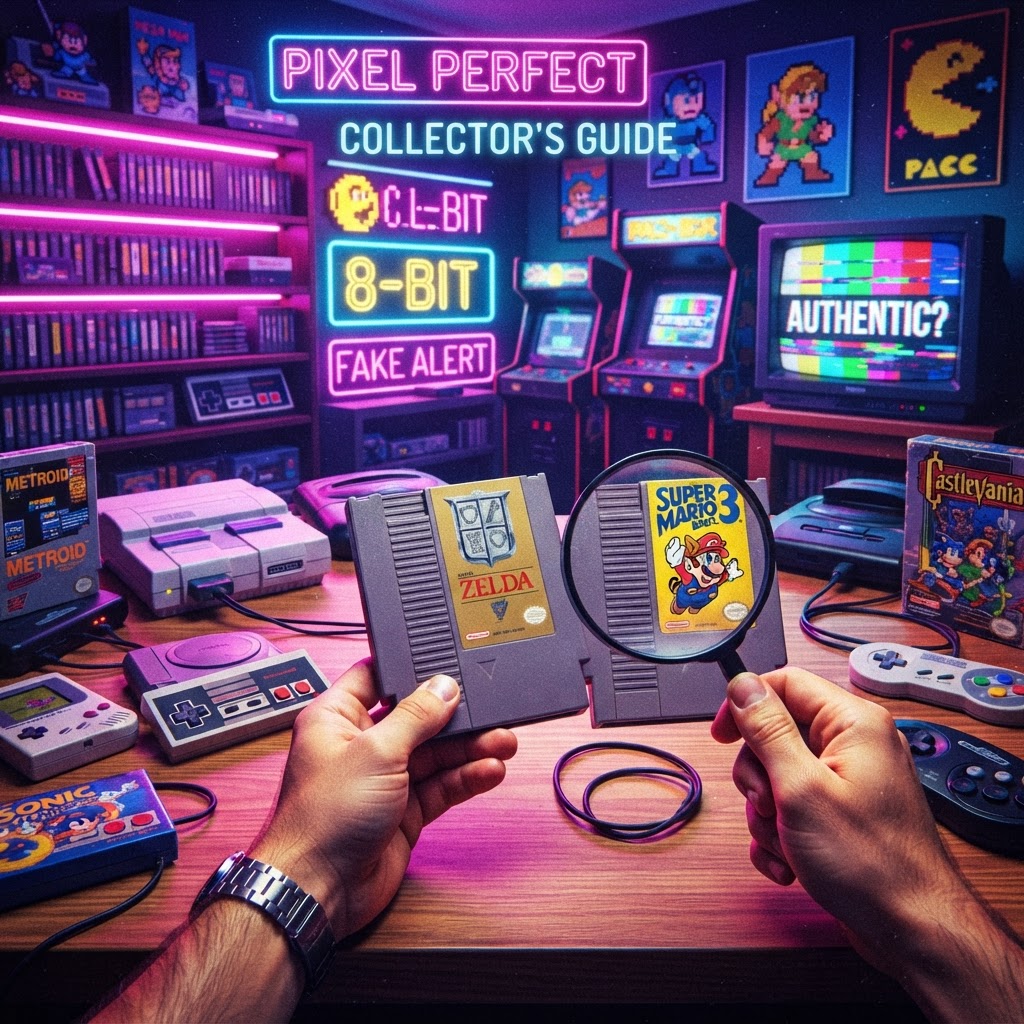
Top 10 Ways to Spot Fake and Reproduction Game Cartridges (Collector's Guide)
Protect your retro game collection from costly counterfeits with these 10 ranked, expert-tested methods for identifying fake and reproduction cartridges before you buy.
Fake retro game cartridges are everywhere — on eBay, at flea markets, in Facebook Marketplace listings, and even at reputable game stores that don't know what they're carrying. With some titles like EarthBound for SNES or Castlevania: Symphony of the Night for PS1 commanding hundreds — sometimes thousands — of dollars, the incentive for counterfeiters is enormous. Whether you're a seasoned collector or just starting out, getting burned by a fake is a rite of passage nobody wants. This guide ranks the 10 most reliable ways to spot a fake cartridge, from the easiest visual checks down to the technical deep-dives that separate the pros from the amateurs.
Why Spotting Fakes Matters More Than Ever
The retro gaming market has exploded in value over the last decade. Alongside that boom, reproduction cartridges — sometimes sold deceptively as originals — have flooded the market. Not all reproductions are scams; some are clearly labeled as fan-made products. But when someone sells a repo as authentic, that's fraud, and it can cost you real money. Knowing how to verify authenticity protects your investment and keeps the collecting community honest.
The Top 10 Methods, Ranked by Reliability and Accessibility
#1 — Check the Cartridge Label Quality and Font
Why it ranks first: It's the fastest check and catches the majority of fakes immediately.
Authentic cartridges use precise, factory-printed labels with crisp fonts, accurate color saturation, and a matte or semi-gloss finish specific to the manufacturer. Fake labels are frequently printed on inkjet or laser printers — look for subtle pixelation, slightly off colors, or a shinier finish than expected. Nintendo labels on NES, SNES, and N64 cartridges have a distinctive feel and texture. Compare the suspected cartridge against a known authentic copy side-by-side whenever possible.
Pro tip: Use a loupe or jeweler's magnifier — authentic labels have a fine print dot pattern, while inkjet reproductions show irregular ink spread under magnification.
#2 — Inspect the Cart Shell and Plastic Quality
Why it ranks second: Authentic shells have a distinct weight, color tone, and seam quality that cheap reproductions can't replicate perfectly.
Nintendo's original gray NES cartridges, SNES purple, and N64 black shells all have specific plastic formulations that aged in a predictable way. Repro shells are often slightly lighter, have visible mold lines in the wrong places, or use a slightly different shade of gray or black. Sega Genesis and Game Boy cartridges have similarly distinct shell characteristics. Squeeze the cartridge gently — authentic carts feel solid and uniformly rigid.
#3 — Open the Cartridge and Examine the PCB
Why it ranks third: Nothing reveals a fake faster than looking at the circuit board inside.
This is where authenticity is undeniable. Original cartridges have manufacturer-specific PCBs with specific chip layouts, solder points, and board colors. A Nintendo PCB, for example, typically has a date stamp, a specific board revision code, and Nintendo's own chips. A fake will often use a generic flash chip (a rectangular chip with generic markings) soldered onto a third-party board.
To open a cartridge safely, you'll need a proper security screwdriver. Many original carts use proprietary screws — NES uses standard Phillips, but SNES, N64, and Game Boy use 3.8mm gamebit screws, and some Sega carts use 4.5mm gamebits. A Console Screw Bit Repair Tool Set is an essential investment for any serious collector. It gives you safe, non-destructive access to cartridge internals without stripping the proprietary screws.
#4 — Examine the PCB Date Stamp vs. the Game's Release Date
Why it ranks fourth: This is a logical check that requires no special tools.
Every authentic PCB has a manufacturing date stamped or printed on it. This date must be equal to or earlier than the game's original release date, never after. If you open a copy of Super Mario World and find a PCB dated 2019, it's obviously a fake. Cross-reference PCB dates with known databases like NES Cart DB or GameFAQs hardware FAQs.
#5 — Check the Weight of the Cartridge
Why it ranks fifth: Authentic carts include specific internal components — battery backup in many RPGs, for example — that affect weight in measurable ways.
Many SNES RPGs like Chrono Trigger or Final Fantasy III included an internal save battery that adds noticeable weight. A surprisingly light copy of one of these titles is a red flag. Use a kitchen scale or small postal scale to compare against known authentic weights documented by collector communities online.
#6 — Verify the Serial Numbers and Copyright Markings on the Shell
Why it ranks sixth: Every authentic cartridge has manufacturer-specific markings molded directly into the shell plastic.
Look for molded copyright stamps, production codes, and region codes on the back or bottom of the shell. These are part of the mold itself on authentic carts — not stickers or printed elements. Fakes often omit these, get the formatting wrong, or use generic placeholder text. Nintendo, Sega, and Sony all have well-documented patterns for these markings.
#7 — Test the Save Function (For Games With Battery Backup)
Why it ranks seventh: A working save function is strong evidence of authenticity, though not conclusive alone.
Classic RPGs like The Legend of Zelda (NES), Pokémon Red/Blue (Game Boy), and Chrono Trigger (SNES) used battery-backed SRAM for saves. Fake carts sometimes use flash memory instead. If you save the game, power off, remove the cartridge, re-insert it, and the save file is gone, you're likely dealing with a fake or a poorly made repo. Tracking these tests is much easier if you keep a Retro Gaming Journal & Notebook — log each cartridge you test, its PCB date, save test results, and purchase source.
#8 — Use a UV/Blacklight Inspection
Why it ranks eighth: UV light reveals details invisible to the naked eye, including authentic Nintendo or Sega holograms and security seals.
Some Nintendo cartridges have security seals or label overlaminates that fluoresce under UV. More importantly, this method can reveal label swaps — where someone peeled a fake label over a real shell — because the adhesive or paper layers will look inconsistent under blacklight. It's a niche but powerful tool in a collector's arsenal.
#9 — Cross-Reference with Known Authentic Photos in Collector Databases
Why it ranks ninth: Community databases are incredibly detailed and free to use.
Sites like The Cartridge Database, GameFAQs hardware boards, and dedicated subreddits (r/gamecollecting) have thousands of high-resolution reference images of authentic cartridges. Comparing your suspected fake against these can surface discrepancies in label fonts, shell screw placement, and PCB layouts you might have missed.
#10 — Run Diagnostics on Game Boy Carts with a GB Operator or Similar Device
Why it ranks tenth: This method is the most technical but is conclusive for Game Boy cartridges specifically.
The Epilogue GB Operator is a USB device that reads Game Boy cartridge data and can identify whether a cart contains official ROM data or a flash chip dump. It's the gold standard for Pokémon cart verification in particular, where fakes are rampant. This ranks last only because it requires extra hardware investment and is platform-specific.
Quick Authenticity Checklist for Buyers
Before purchasing any retro cartridge, run through this fast checklist:
- ✅ Label quality — crisp, non-pixelated, correct sheen?
- ✅ Shell color and weight match known authentic examples?
- ✅ Molded copyright stamps present on shell?
- ✅ PCB visible (if possible) — no generic flash chips?
- ✅ Save function verified?
- ✅ Cross-referenced with collector database photos?
Essential Tools for Serious Cartridge Collectors
Beyond the inspection methods above, building a small toolkit makes authentication far more reliable. A Console Screw Bit Repair Tool Set is non-negotiable for opening carts safely. If you're also testing your authentic finds on original hardware, a quality S-Video to HDMI Adapter lets you play original cartridges on modern displays with excellent image clarity — a great way to verify that a cart boots correctly and saves properly. And if your original console is showing signs of age after years of use, checking out a Retro Console Power Supply Replacement ensures power instability isn't causing false save failures during your testing.
Conclusion: Protect Your Collection, Trust Your Tools
Fake and reproduction cartridges are a real and growing problem in the retro gaming market, but they're not unbeatable. Armed with these 10 ranked methods — from a quick label inspection to a full PCB teardown — you'll be far better equipped to buy with confidence. The key is building habits: check every cartridge, document your findings, and don't let nostalgia override skepticism.
Start building your authentication toolkit today. Grab a Console Screw Bit Repair Tool Set and a Retro Gaming Journal & Notebook to log your collection properly — your future self (and your wallet) will thank you.