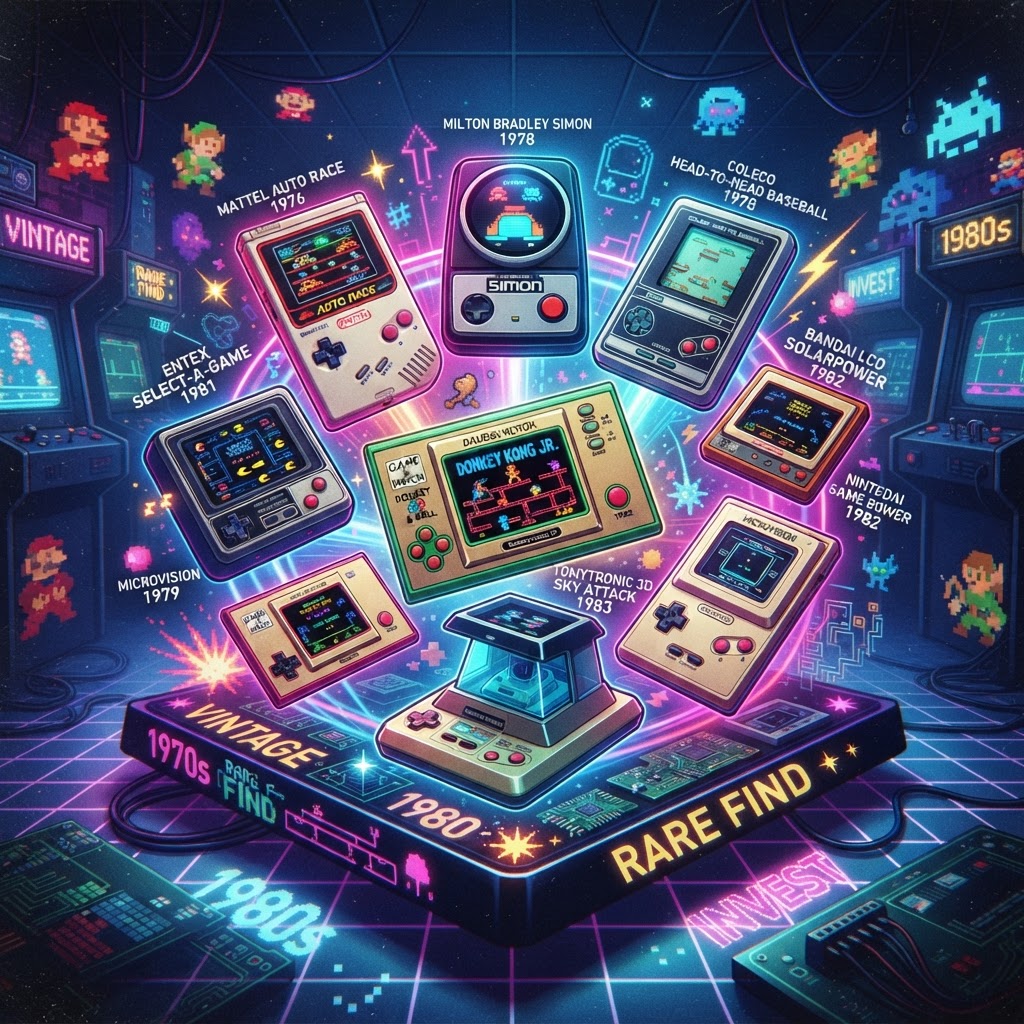
The Dawn of Pocket Power: Beyond Plastic Toys
For many, handheld gaming began in 1989. But true collectors know that the real "Gold Rush" occurred throughout the late 1970s and early 1980s. Devices like the Milton Bradley Microvision (1979)—the first true cartridge-based handheld—and the iconic Nintendo Game & Watch series were architectural marvels of their time.
Unlike today’s disposable tech, these devices were built with mechanical precision. Because they were often made with fewer complex integrated circuits than modern consoles, they are surprisingly durable. If you are lucky enough to source a pristine Game & Watch unit, you aren't just buying a toy; you are securing a piece of computing history that continues to appreciate in value among high-end collectors.
Preserving Your Investment: The Curator’s Mindset
If you’ve decided to start or expand a collection of pre-Game Boy hardware, your mindset must shift from "player" to "curator." These machines are now 40+ years old. The plastic shells are prone to brittle aging, and the internal contacts often oxidize.
To maintain the long-term value of your collection, you must be proactive. First, address the internal health of any cartridge-based units you own. Over time, internal capacitors and batteries fail, causing data loss. Keeping a stash of Replacement Game Cartridge Save Battery kits on hand is the single best way to ensure your collection remains functional, which is vital for resale value.
Furthermore, environment is everything. You shouldn't leave these historical artifacts in a dusty drawer. When not in use, store your devices in a Retro Console Glass Display Case to prevent UV damage to the screens and casing. If you travel to gaming expos or swap meets, treat your hardware with the respect it deserves by using a padded Retro Console Travel Bag to prevent micro-scratches and impact damage.
Why Pre-1989 Handhelds are the Next "Blue Chip" Asset
Why are these specific devices becoming highly sought after? It comes down to scarcity and cultural impact. Many of the LCD handhelds produced by companies like Tiger Electronics, Entex, and Bandai were treated as disposable. They were dropped on playgrounds and forgotten in junk bins.
Because so few survived in "Grade A" condition, a fully operational unit from 1982 is now far rarer than a boxed copy of an average NES game. As the generation that grew up with these devices reaches their peak earning years, the demand for nostalgic, high-quality, pre-Game Boy hardware is skyrocketing.
Maintenance Tips for the Serious Collector
To keep your collection in investment-grade condition, follow these golden rules:
- Clean Contacts Regularly: Never allow battery corrosion to sit. Use Isopropyl Alcohol Contact Cleaner to wipe down battery terminals and cartridge pins.
- Protect the Screen: The screens on early LCD handhelds are the most fragile component. If you are actively using your device, ensure you have a Handheld Console Screen Protector applied to prevent permanent surface marring.
- Environment Control: Avoid extreme heat or humidity, which are the enemies of 40-year-old soldering joints.
The Verdict
The era before the Game Boy was an experimental frontier. It was a time when engineers crammed entire worlds into pockets using little more than VFD displays and sheer ingenuity. By collecting and properly maintaining these devices, you aren't just hoarding "old tech"—you are preserving the lineage of the $200 billion gaming industry.
Whether you are looking to showcase your collection or simply want to relive the tactile joy of an original Donkey Kong Game & Watch, now is the time to start. Check out our shop to find the gear you need to keep your collection pristine for the next forty years, and don't forget to grab a Retro Gaming T-Shirt to show off your classic credentials at the next convention!