Building the Ultimate Retro Gaming Display Shelf: Portable Setups vs. Home Shrines
Whether you're a dedicated home collector or a retro gamer always on the move, this guide breaks down exactly how to build a stunning retro gaming display shelf — and reveals why portable setups are changing the hobby forever.
Why Your Display Shelf Matters More Than You Think
There's a moment every retro gamer knows: you pull out a battered cartridge, blow into it for good luck, and something magical happens. But if that cartridge is buried in a dusty bin under your bed, nobody — including you — gets to appreciate it.
A well-built retro gaming display shelf is more than decoration. It's a statement of identity, a preservation strategy, and increasingly, a portable system that travels with you. In 2024, the question isn't just "how do I display my collection?" It's "how do I build a setup that works at home and on the road?"
This guide answers both questions — with practical gear recommendations that will make your setup look professionally curated whether you're showing it off in your living room or hauling it to a retro gaming convention.
Home Shrine vs. Portable Setup: Know Your Style First
Before you buy a single piece of shelving or hardware, you need to decide what kind of retro gamer you are — or aspire to be.
The Stationary Home Collector
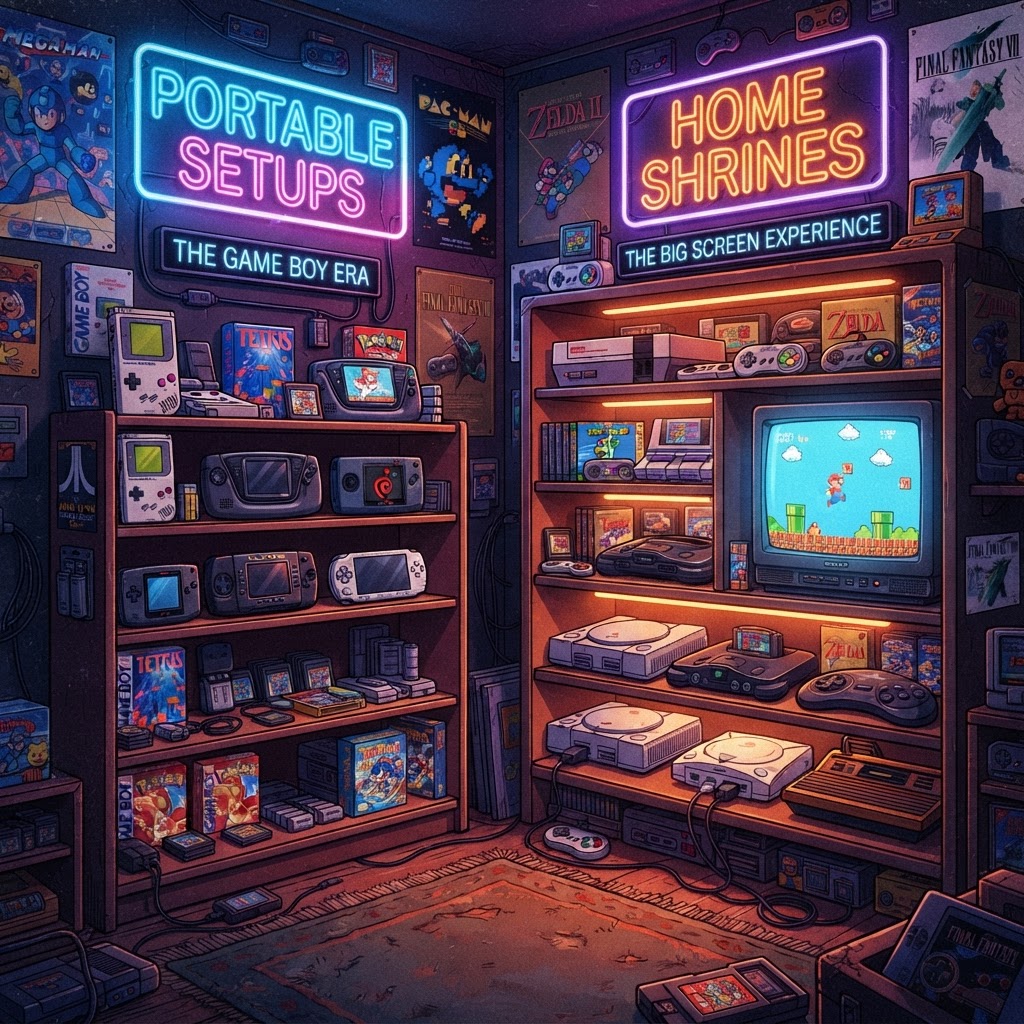
If you want your collection permanently mounted, backlit, and Instagram-worthy, a stationary home setup is your goal. Think floating shelves lined with SNES cartridges, original Game Boys arranged by color, and a dedicated CRT in the corner humming with nostalgia. This setup prioritizes aesthetics, accessibility, and immersion.
The Portable Retro Gamer on the Go
More and more collectors are building modular retro gaming setups — displays that pack down into a single bag or rolling case. These setups are perfect for game rooms at Airbnbs, retro gaming expos, flea market hauls, or simply moving between your home office and living room. Portability doesn't mean sacrificing style; it means being smart about which gear you invest in.
The Foundation: Shelving, Organization & Display Principles
Regardless of portability goals, great retro gaming display shelves share a few non-negotiables:
- Tiered depth — consoles in the back, controllers and cartridges up front
- Consistent lighting — even, warm light eliminates harsh shadows on box art
- Protection — acrylic risers and cases guard against UV fading and dust
- Visual cohesion — grouping by console era or color palette looks intentional, not chaotic
For home setups, IKEA KALLAX and LACK shelves remain the gold standard in the retro gaming community. Their modular sizing fits perfectly around CRT televisions and standard game cases. For portable setups, stackable acrylic display risers and lightweight folding shelf kits are the way to go — they assemble in minutes and pack flat.
Lighting Your Display: The Game-Changer Nobody Talks About
Ask any serious collector and they'll tell you: lighting transforms a good display into a great one. The right lighting doesn't just illuminate your games — it creates atmosphere.
For home setups, LED strip lighting mounted behind shelves creates that iconic "glow from behind" effect that makes cartridge labels pop. For portable setups, battery-powered LED strips are lightweight, require no wall outlet, and can be repositioned in seconds.
The Retro Gaming LED Backlight Strip is an essential starting point for any display build. Look for strips with adjustable color temperature (warm whites for a retro CRT vibe, or RGB for a more modern aesthetic) and self-adhesive backing that won't damage shelving when removed — critical for portable users who reassemble their setup frequently.
Pro tip for portable builds: Coil your LED strips with a velcro tie between setups. A 2-meter strip weighs almost nothing and fits in any gear bag.
Controllers, Decals & Making Your Setup Personal
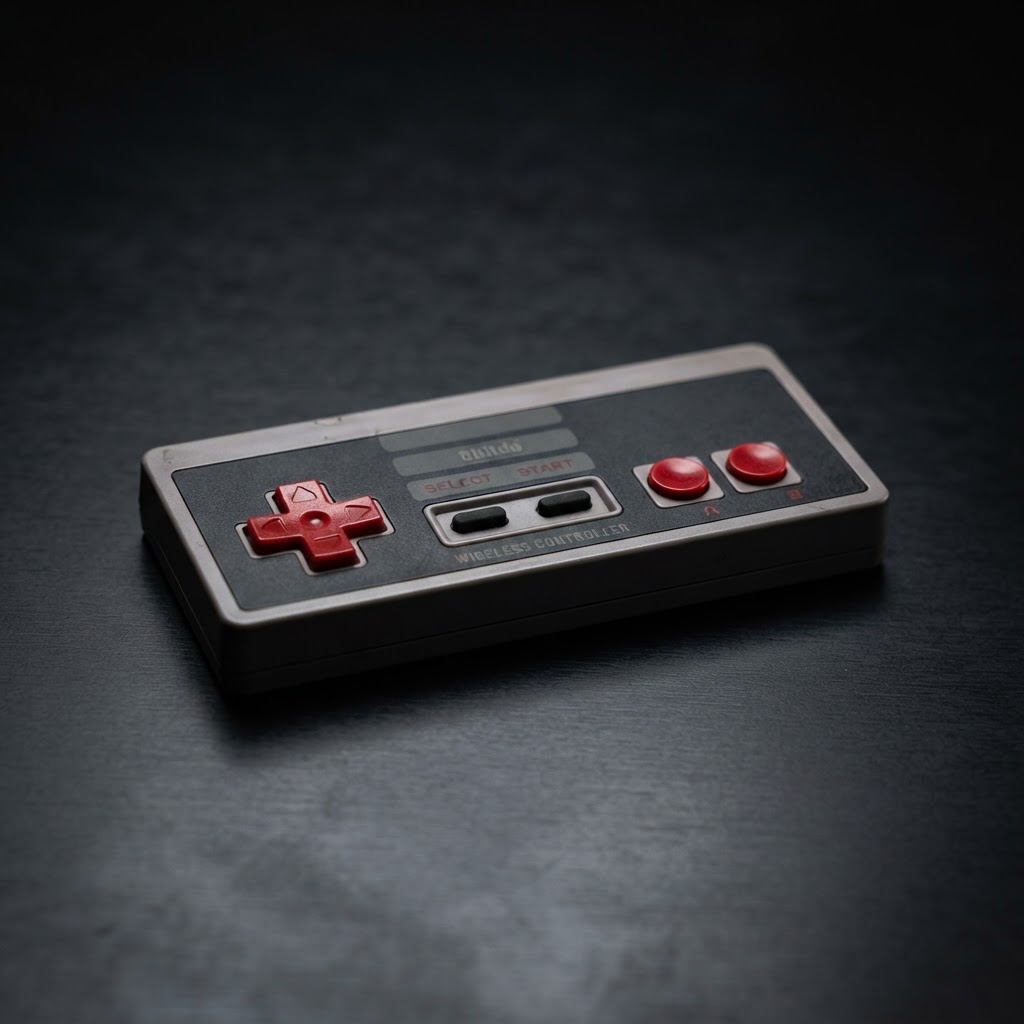
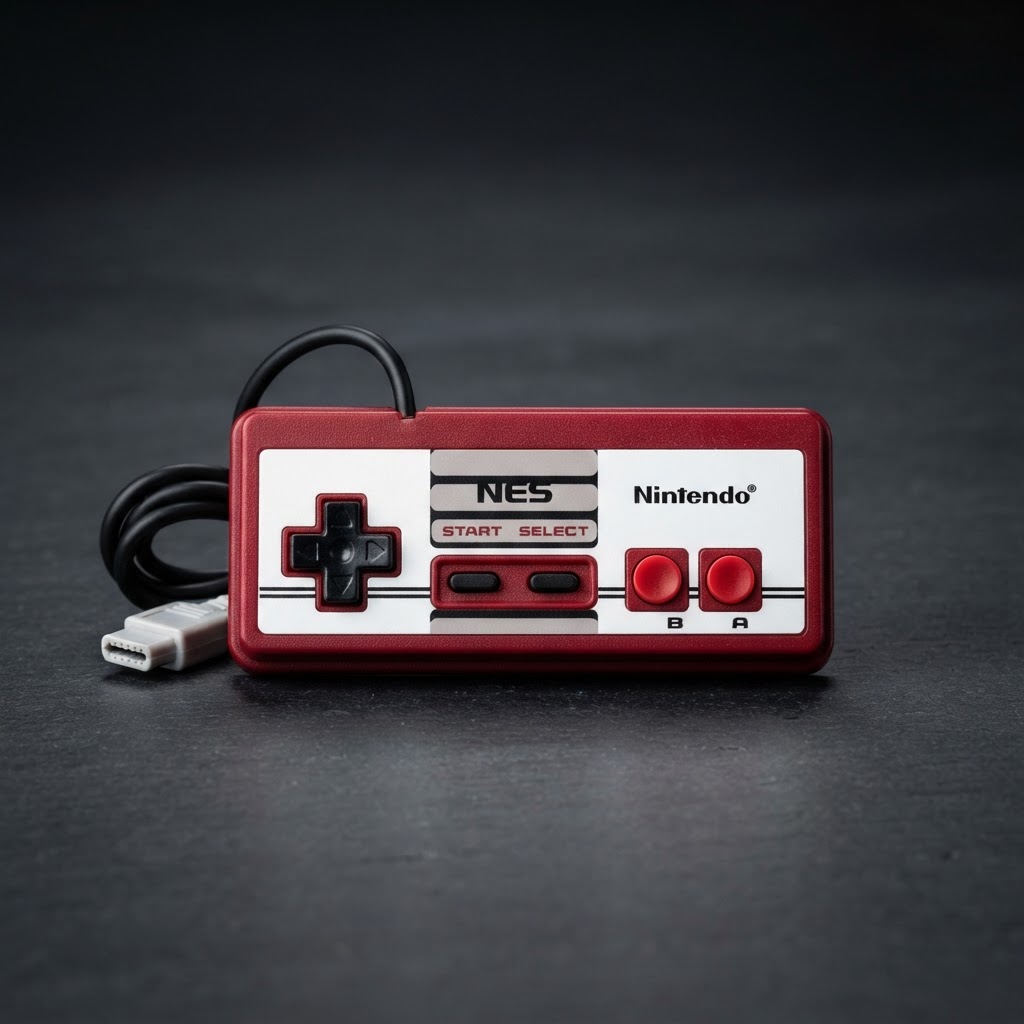
A display shelf without controllers is a bookshelf. Your controllers are the heroes — they deserve their own real estate and a little personality.
Wall-mounted controller hooks (widely available and inexpensive) work brilliantly for both home and portable pegboard setups. For a portable build, a small pegboard panel (18" x 24") with pre-fitted hooks can be disassembled and stored flat in under two minutes.
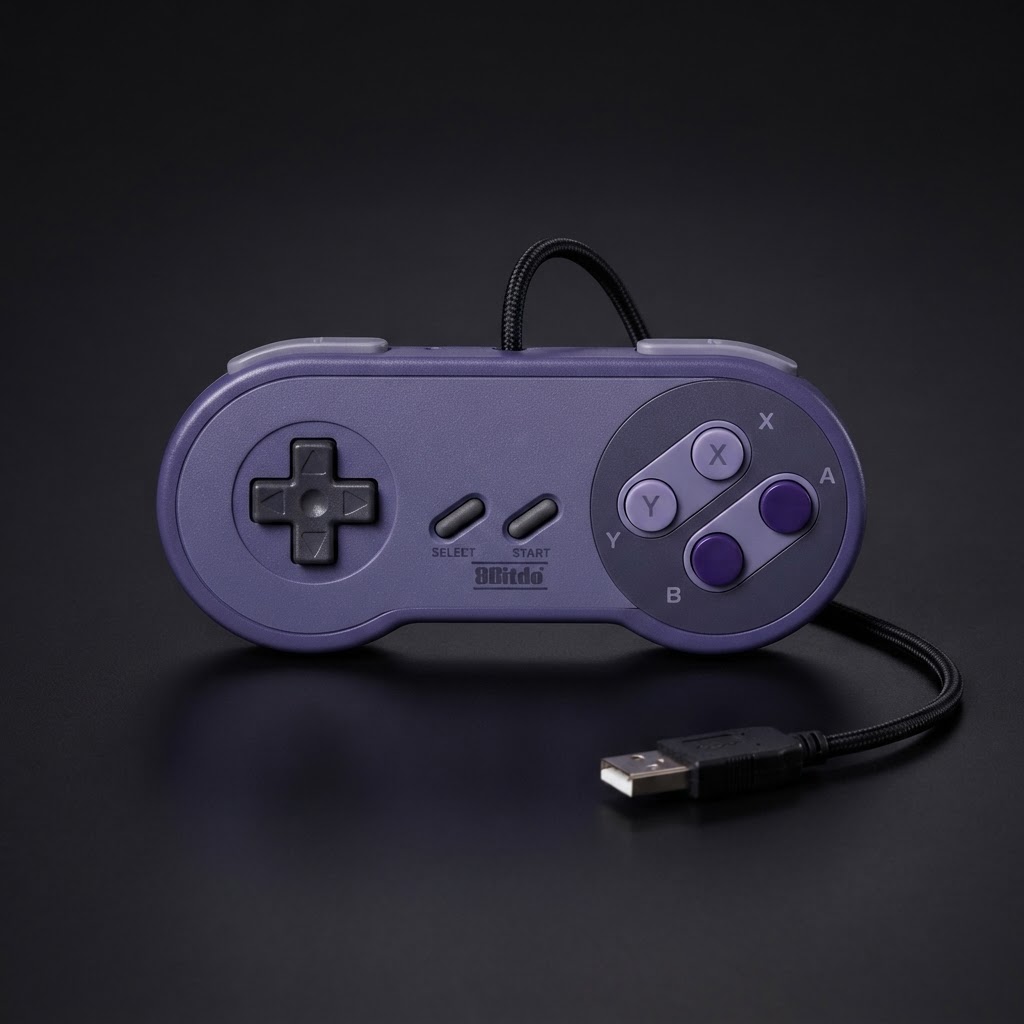
Want to add genuine personality without permanent modification? A Controller Skin/Decal Wrap lets you customize the look of your SNES pad, Genesis controller, or even original Xbox Duke without touching the original hardware. These are especially popular at gaming conventions where a distinctive controller setup stops people mid-aisle.
The Portable Display Centerpiece: Your Screen
Here's where the portable vs. home debate gets really interesting. A stationary home collector will almost always run original hardware on a dedicated CRT or a high-quality modern display. But for a portable setup, you need something that travels well, looks the part, and connects to modern and legacy hardware alike.
The Portable CRT-Style Retro Monitor is the single best upgrade for a portable retro display. These compact monitors nail the scanline aesthetic of original CRT sets while being a fraction of the size and weight. They're battery-compatible models that work on a desktop at home or flat on a game room table at a friend's house.
For connecting older consoles that output S-Video (SNES, N64, original PlayStation), an S-Video to HDMI Adapter is an absolute must-have. It bridges the gap between original hardware and modern displays cleanly, preserving the native picture quality without expensive upscalers.
Adding a Modern Emulation Station to Your Shelf
No retro gaming display is complete without at least one modern emulation device. These function as both display pieces and functional gaming machines.
For portable builds especially, the Steam Deck Handheld Gaming PC has become the retro gamer's Swiss Army knife. With EmuDeck installed, it plays virtually every console generation through the PS2/Dreamcast era flawlessly. On your home shelf, it sits in its dock as a sleek display piece. On the road, it slips into your bag and plays the same library. It's the rare piece of hardware that genuinely justifies its place in both a stationary and portable retro setup.
Finishing Touches That Elevate Any Setup
The difference between a good display and a jaw-dropping one is almost always in the details:
- Mouse pads with retro art — a Retro Gaming Mouse Pad under your keyboard or in a designated PC gaming corner adds thematic consistency and protects surfaces during transport
- Themed coasters — a Retro Gaming Coasters Set might sound minor, but they signal to every guest that this is a curated space, not an accidental pile of old electronics
- DIY arcade accent — for home collectors adding a bartop or mini-arcade corner, an Arcade Cabinet Joystick Kit turns a flat shelf display into an interactive centerpiece
Quick Build Checklist: Portable vs. Home Setup
| Feature | Home Shrine | Portable Build | |---|---|---| | Shelving | KALLAX / floating shelves | Folding acrylic risers | | Lighting | Hardwired LED strips | Battery-powered LED strips | | Display | Dedicated CRT or OLED | Portable CRT-style monitor | | Controllers | Wall hooks + mounts | Pegboard panel | | Emulation | Dedicated mini-PC or Raspberry Pi | Steam Deck | | Connectivity | S-Video to HDMI adapter | Same — essential for both |
Conclusion: Build the Setup That Fits Your Life
The ultimate retro gaming display shelf isn't defined by how many consoles you own or how expensive your lighting is. It's defined by how well it reflects the way you actually play and collect. A portable setup that travels to three conventions a year and then reassembles perfectly in your apartment is the ultimate setup — for you.
Start with the foundation (great lighting), add your personal touch (controller decals, themed accessories), and build toward the centerpiece (a quality portable monitor with the right adapters). Every element should earn its place.
Ready to get started? Pick up a Retro Gaming LED Backlight Strip today — it's the single fastest way to transform any shelf from a storage solution into a display worth showing off.