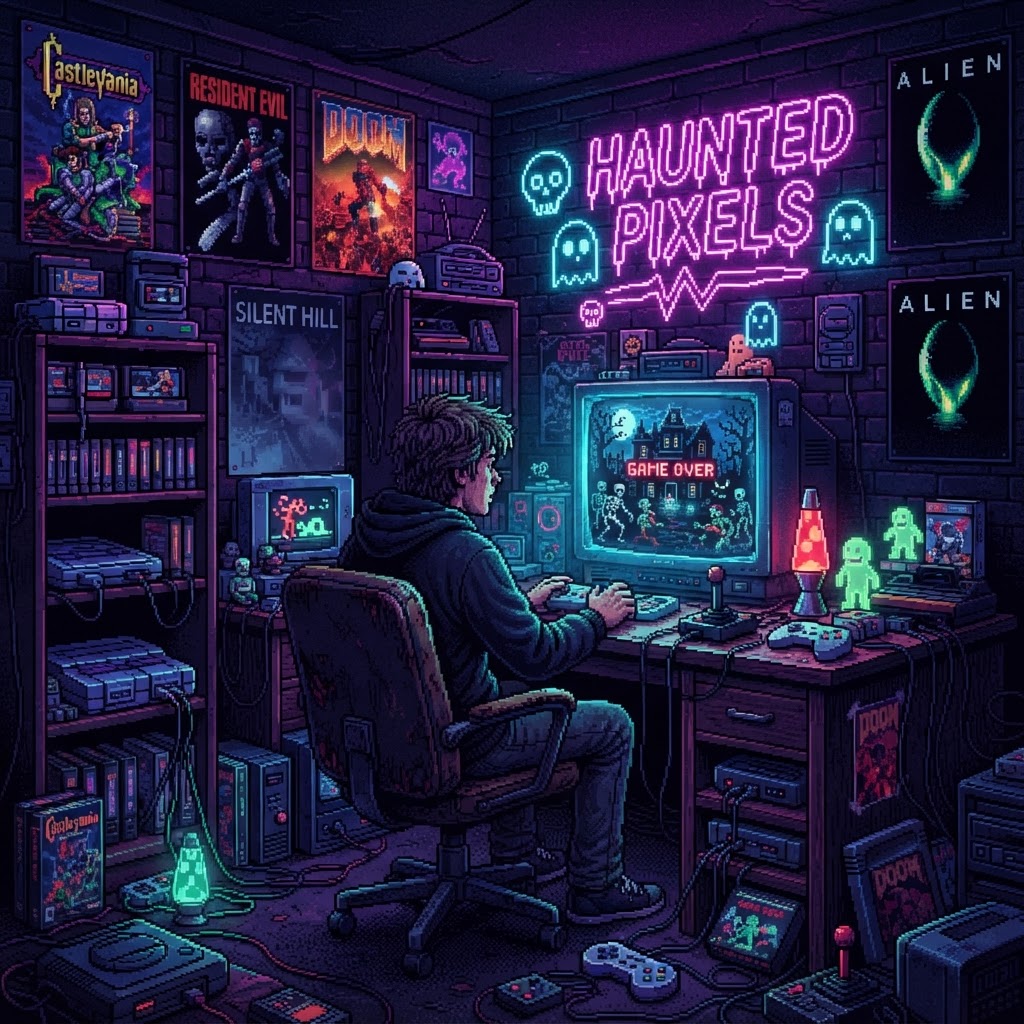
There is a specific kind of terror that only exists in the low-poly, pixelated shadows of the 90s and early 2000s. Unlike the high-fidelity jump scares of today, retro horror relied on crushing atmosphere, fixed-camera disorientation, and the limitations of hardware to force your imagination to fill in the gaps. If you’re planning to build a dedicated retro gaming room, there is no better theme than the macabre.
Creating a "Horror Den" isn't just about putting a CRT in a dark corner; it’s about curating a space that respects the medium’s legacy while ensuring you can actually play these masterpieces on modern displays.
The Architecture of Fear: Setting the Mood
When you step into a retro gaming room designed for horror, the environment should feel like an extension of the games themselves. Start with your lighting. To prevent eye strain during those marathon sessions of Silent Hill, install a Retro Gaming LED Backlight Strip behind your screen. A dim, blood-red or eerie cyan glow provides subtle ambient light that keeps the immersion high without washing out the deep blacks of the original horror visuals.
Next, consider the hardware. Emulation is convenient, but the "feel" of original hardware is unmatched. If you want a pristine experience without hunting for aging, yellowing consoles, invest in a high-quality FPGA Retro Console (Analogue-Style). These consoles utilize hardware-level replication to ensure the frame timing and responsiveness—critical for tight horror game combat—remain exactly as they were in 1999.
The Best Retro Horror Games That Still Scare Today
To populate your collection, focus on titles that prioritize psychological tension over scripted scares.
1. Silent Hill (PlayStation)
Often cited as the gold standard, Silent Hill uses the thick, suffocating fog of the town to mask the PS1's draw distance limitations, inadvertently creating a terrifying sense of isolation. It remains the best example of "liminal space" horror ever committed to a disc.
2. Clock Tower (Super Famicom/PlayStation)
If you want to feel truly helpless, this is your pick. Being chased by Scissorman through a maze-like mansion is a masterclass in panic-inducing game design. It’s a point-and-click style game that feels like a slasher movie where you are the final girl—or boy—trying to find a hiding spot.
3. Resident Evil 2 (PlayStation)
The original RE2 delivers a sense of dread through its masterful use of fixed camera angles. Not knowing what is around the corner—or hearing the rhythmic thud of Mr. X in a hallway you haven't cleared—is an anxiety-inducing loop that no modern remake has fully captured.
Preserving Your Collection
Building a horror-themed room is a labor of love, but it requires maintenance. If you are collecting physical media, keep your original discs and cartridges in top shape by using a USB Cartridge Reader/Dumper. This allows you to create digital backups of your prized horror imports, ensuring that if an old cartridge eventually fails, your save files and library remain eternal.
For those who want to add a bit of aesthetic flair to their shelving, keep a Classic Games Collector Reference Book nearby. It’s the perfect conversation piece for guests and provides vital context on the development histories of the titles you’ve chosen to feature in your collection.
Why Retro Horror Still Works
Modern games often hold your hand, providing waypoints and easy-to-read cues. Retro horror does the opposite: it gives you a rusted knife, a limited supply of health items, and a map that is barely readable. It forces you to be smart, methodical, and—above all—terrified. When you sit down in your dedicated gaming room, with the lights dimmed and your retro console firing up, you aren't just playing a game; you’re entering a time capsule of fear.
Ready to start your collection? Organize your space, dim the lights, and make sure your hardware is in top shape. You can start by checking out our favorite FPGA Retro Console (Analogue-Style) options to get the most authentic and terrifying experience possible.