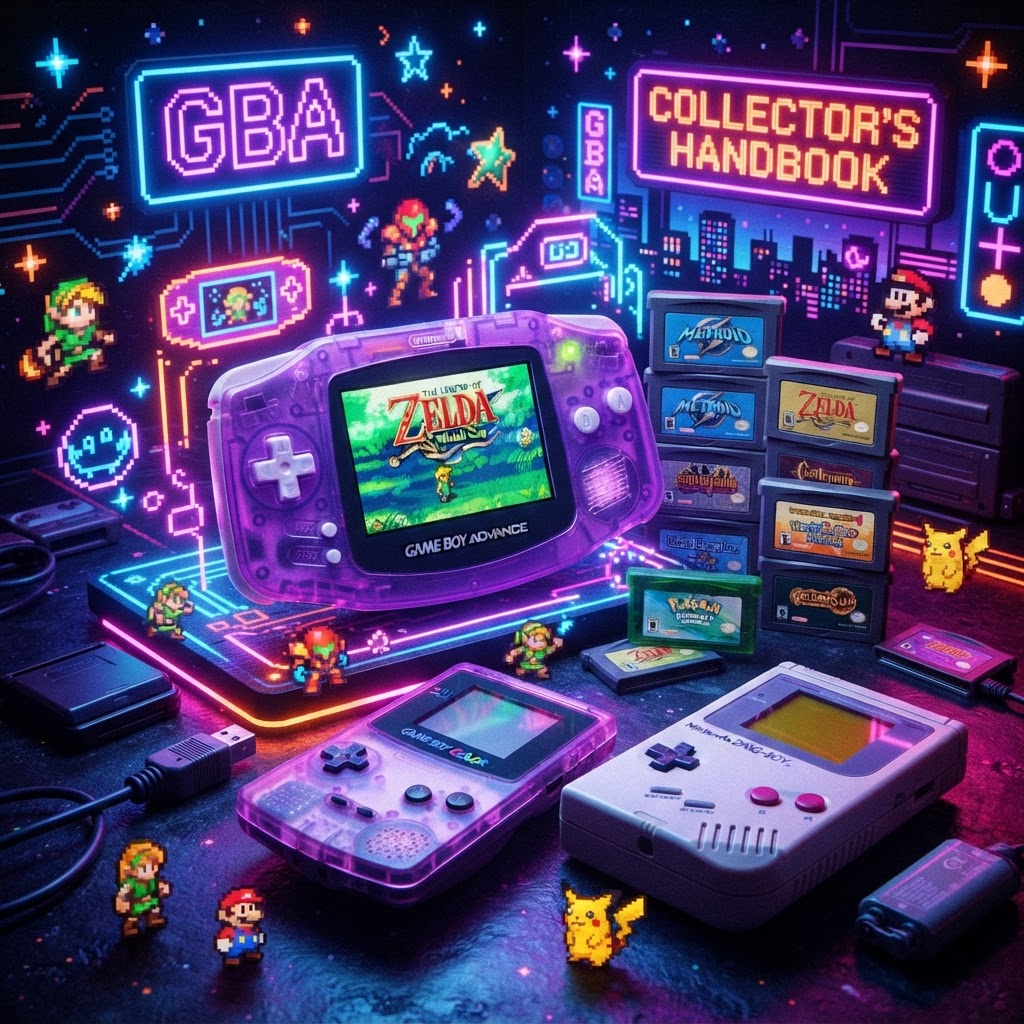
Why the Game Boy Advance Is the Collector's Handheld of the Moment
The Game Boy Advance occupies a uniquely compelling space in retro gaming history. Released in 2001, Nintendo's 32-bit handheld hosted one of the most extraordinary software libraries ever assembled — over 1,000 titles spanning timeless JRPGs, definitive 2D platformers, and legendary ports. Demand among collectors has surged dramatically over the past five years, with premium titles like Castlevania: Aria of Sorrow, Mother 3 (Japanese import), and Fire Emblem: The Sacred Stones routinely selling for $80–$200+ in complete-in-box condition.
For the enthusiast-grade collector, the GBA isn't just nostalgia — it's a curated investment in gaming history. And like any serious pursuit, doing it right demands the right knowledge, tools, and gear.
Understanding the GBA Hardware Lineup: What Serious Collectors Actually Buy
The Original GBA (AGB-001): The Purist's Choice
The original "clamshell-free" Game Boy Advance is beloved for its horizontal form factor but notorious for its unlit screen. Serious collectors often prize factory-sealed units or mint-condition loose handhelds for display purposes. Cosmetic grading matters enormously here — look for units with sharp label edges, no yellowing, and minimal scuffing on the directional pad.
The Game Boy Advance SP (AGS-001 and AGS-101): The Holy Grail Hardware
Among collectors who actually play their hardware, the AGS-101 (backlit SP model, released 2005) is considered the gold standard. It commands a significant premium over the AGS-001 (front-lit), and for good reason: the screen quality is dramatically superior. Identifying the 101 model requires checking the back label — "AGS-101" is stamped clearly. Mint-condition AGS-101 units in rare colorways like Oys Pearl, Pearl Blue, or the Tribal Edition routinely exceed $150–$250 on the secondary market.
The Game Boy Micro: The Collector's Boutique Pick
Released in 2005, the Game Boy Micro is a premium collector target due to its small production window and interchangeable faceplates. Limited edition faceplates (Famicom-style, NES 20th Anniversary, Ongaku Player) are particularly sought after. The Micro does not play original Game Boy or Game Boy Color cartridges — a trade-off collectors must weigh carefully.
Building a Premium GBA Cartridge Collection: Strategy and Grading
Complete-in-Box (CIB) vs. Loose Cartridges
Enthusiast collectors should make a clear decision early: CIB or loose? Complete-in-box GBA games — meaning original cart, manual, and box in excellent condition — can command 3x to 10x the price of loose cartridges. The investment case for CIB is strong given the scarcity of intact original packaging, but the market for high-grade loose carts is equally valid for those prioritizing gameplay.
The Tier-1 GBA Collection: Games Worth Paying Premium Prices For
The most investment-worthy GBA titles include:
- Castlevania: Aria of Sorrow – Among the finest 2D action-RPGs ever made
- Mother 3 (Japanese import) – Never officially localized; the GBA's crown jewel import
- Golden Sun and Golden Sun: The Lost Age – The definitive GBA JRPG duology
- Metroid Fusion – A masterclass in atmosphere and design
- Fire Emblem and Fire Emblem: The Sacred Stones – CIB copies are especially valuable
- Mega Man Zero Collection titles – Individually scarce, increasingly expensive
- Boktai: The Sun Is in Your Hand – Novelty solar sensor gameplay, high collector appeal
To research pricing intelligently, a Classic Games Collector Reference Book is an indispensable physical resource for cross-referencing valuations, identifying variant editions, and understanding grading standards — something no casual price lookup tool fully replaces.
Spotting Reproduction Cartridges: A Critical Skill
The GBA reproduction market is rampant, particularly for expensive titles like Mother 3, Fire Emblem, and Castlevania entries. Authentication checklist for serious collectors:
- PCB inspection — Original Nintendo boards have specific solder patterns; third-party PCBs are telltale
- Label printing — Authentic labels have precise dot-matrix printing; repos often appear slightly blurry or over-saturated
- Save battery behavior — Many repos use flash memory instead of SRAM with a battery
- Shell mold markings — Authentic carts have specific Nintendo copyright mold text inside the shell seam
Display, Storage, and Protection: Doing It Right at the Collector Level
Display Cases and UV Protection
Direct sunlight is the enemy of GBA cartridge labels and box art. Serious collectors invest in UV-filtering display cases — acrylic wall-mount cases designed for Game Boy hardware and cartridges are widely available and dramatically extend the preservation window of your collection.
Traveling With Your Collection
If you're buying at retro gaming expos, flea markets, or conventions — or simply want to safely transport your hardware to showcases — a dedicated Gaming Console Backpack provides padded, organized compartments specifically designed to protect valuable hardware and cartridges in transit. Never transport an AGS-101 SP or a Game Boy Micro loose in a bag — cosmetic damage directly impacts resale and display value.
Keeping Hardware Clean and Shelf-Ready
For collectors who run a multi-console display setup featuring their GBA alongside SNES, NES, or other retro hardware, Console Vent Dust Filters are a practical and underrated investment. Dust accumulation degrades both cosmetic condition and long-term functionality, particularly in display environments.
Playing Your Collection: Enthusiast-Grade Setup Options
The Analogue Solution for GBA Collectors
For collectors who want to experience their GBA library on a modern display without compromising hardware longevity, FPGA-based solutions have become the enthusiast standard. The Analogue 3D FPGA Console represents the cutting edge of cycle-accurate emulation in premium hardware form — a natural companion piece for any serious retro collection.
Recording and Showcasing Gameplay
Collectors who document their finds on YouTube or streaming platforms need professional capture solutions. A Professional Capture Card for Retro Consoles delivers the signal quality necessary to showcase GBA gameplay authentically — preserving the look and feel of original hardware for audiences who care about the details.
Managing Multiple Retro Systems
If your GBA collection exists alongside a broader retro setup, a Multi-Console AV Switch Box keeps your display station clean and functional without constantly swapping cables — an elegant solution for collectors who rotate through hardware regularly.
Pricing Trends and Long-Term Investment Outlook
The GBA market has matured considerably since 2020. Complete-in-box prices for Tier-1 titles have stabilized at elevated levels, while hardware — particularly AGS-101 units in rare colorways and Game Boy Micros with original faceplates — continues to appreciate. The key insight for serious collectors: condition is everything. A CIB Metroid Fusion in 9/10 box condition is worth dramatically more than a technically "complete" copy with significant wear.
Watch for regional variants — Japanese GBA releases often feature superior box art and are significantly cheaper on import markets. PAL region games carry premium values for specific titles unavailable in North American releases.
Conclusion: Build Your GBA Collection With Intention
The Game Boy Advance rewards collectors who approach it with rigor and enthusiasm in equal measure. Focus on authentication, prioritize condition grading, target hardware variants that matter, and invest in the right tools to protect and showcase what you build.
Ready to take your collection to the next level? Start with the essential resource every serious collector needs: a Classic Games Collector Reference Book — your definitive companion for navigating one of retro gaming's most exciting and rewarding collecting categories.