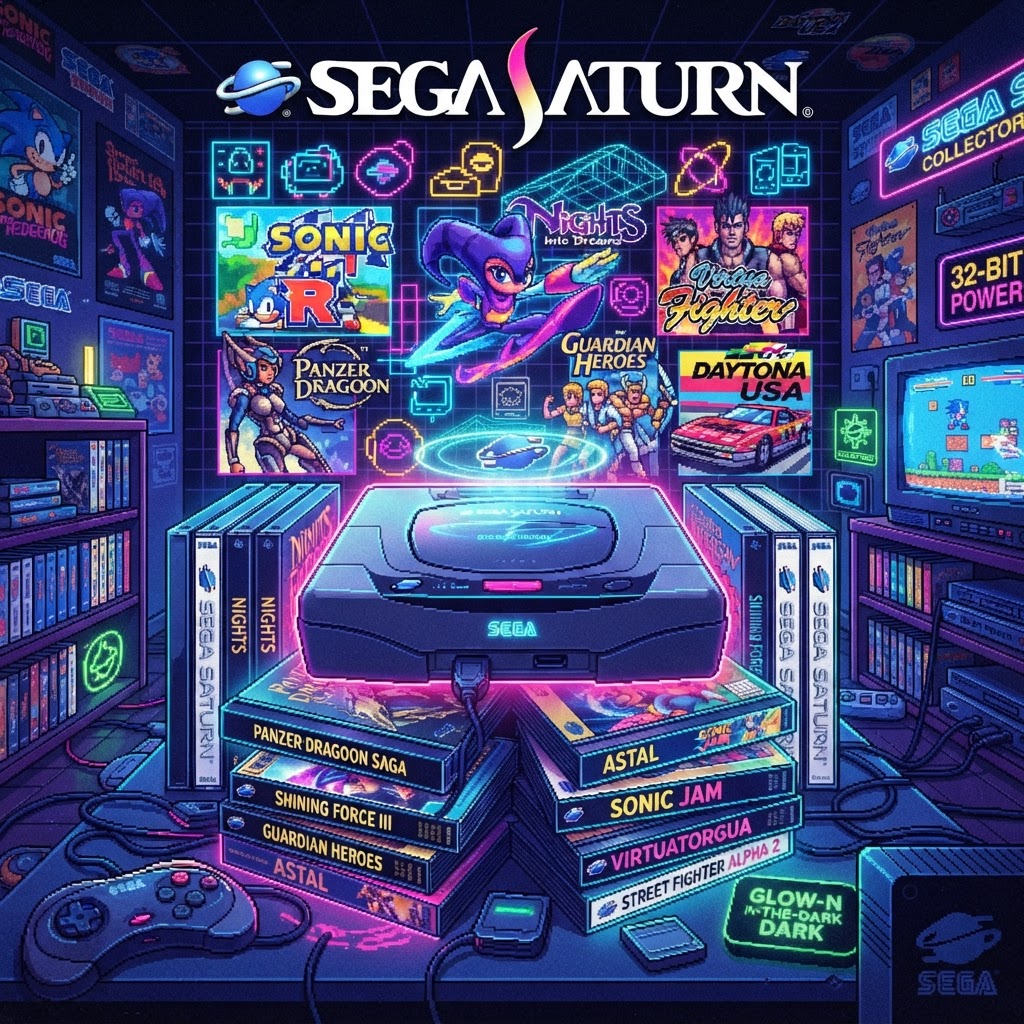
Sega Saturn Collecting: The Complete Guide to Building Your Library (Pros, Cons & What to Buy First)
Whether you're a seasoned retro collector or just discovering the Saturn's legendary library, this definitive guide breaks down every key decision you'll face—console variants, game sourcing strategies, display setups, and storage—with honest side-by-side comparisons so you can build the ultimate Saturn collection without the regret.
Why the Sega Saturn Is One of Retro Gaming's Best Kept Secrets
The Sega Saturn was a commercial underdog that hid a treasure trove of brilliant games. Released in 1994 in Japan and 1995 in North America, it was overshadowed by the PlayStation's marketing machine—but today, collectors recognize it as home to some of the finest 2D shooters, fighters, and JRPGs ever made. Titles like Radiant Silvergun, Panzer Dragoon Saga, and Guardian Heroes remain genre benchmarks. Prices have climbed steeply, making smart collecting decisions more important than ever.
This guide structures everything as a direct comparison: North American vs. Japanese hardware, physical vs. digital-adjacent options, CRT vs. modern displays, and budget vs. premium collecting approaches. Let's get into it.
North American Saturn vs. Japanese Saturn: Which Should You Buy?
This is the first question every new collector faces, and the answer isn't as simple as "just grab a cheap one."
North American Model (Model 1 & Model 2)
Pros:
- No region barrier for the hundreds of Western releases
- Easier to find locally at thrift stores and flea markets
- Model 2 (oval buttons) is slightly more compact and runs cooler
Cons:
- North American library is significantly smaller (~250 titles vs. 1,000+ in Japan)
- Many of the platform's best games were Japan-exclusive
- Prices on rare NA titles like Panzer Dragoon Saga can exceed $300–$700 for a CIB copy
Japanese Saturn (including Hi-Saturn and Victor V-Saturn variants)
Pros:
- Access to the full library—including hundreds of exclusive shooters, RPGs, and fighters
- Japanese games often cost 60–80% less than their NA counterparts
- The Hi-Saturn and V-Saturn are premium variants with superior build quality
- Japan used a standardized cartridge slot for RAM and save data, well-supported
Cons:
- Requires a region-free mod chip or an Action Replay cart to play JP games on an NA unit
- Japanese text can be a barrier for story-heavy games
- Shipping from Japan adds cost and risk
Verdict: For serious collectors, a Japanese Saturn (or a region-modded NA unit) is the better long-term investment. For casual players who want plug-and-play simplicity with English games, the NA Model 2 is the practical entry point.
Building Your Game Library: Physical Cartridges vs. Optical Drive Emulation (ODE)
The All-Physical Route
Pros:
- Authentic ownership, shelf appeal, and resale value
- No hardware modification required
- CIB (Complete In Box) copies are beautiful display pieces
Cons:
- Costs are skyrocketing—Radiant Silvergun CIB can top $200, Dragon Force regularly hits $150+
- Saturn CDs are susceptible to disc rot and laser wear
- Building a complete library physically could cost $10,000+
Optical Drive Emulators (ODEs) like Fenrir or MODE
Pros:
- Load games from SD card or USB—no disc laser wear
- Access the full library for a fraction of physical costs
- Near-perfect compatibility with Saturn hardware behavior
Cons:
- Requires opening the console and voiding any warranty
- Upfront mod cost ($60–$120 for the ODE + installation time or fees)
- Purists argue it diminishes the "collecting" aspect
- Some edge-case compatibility issues with specific titles
Verdict: If you love the hunt and the shelf display, go physical for your favorites and use an ODE for deep-catalog exploration. These approaches work brilliantly in tandem.
Display Options: CRT vs. Modern Upscaled Displays
The Saturn outputs a 240p signal natively, which means your display choice dramatically impacts picture quality and gameplay feel.
Playing on a CRT
Pros:
- Zero input lag—critical for Virtua Fighter 2 or any shmup
- Scanlines are built in, giving that authentic arcade feel
- Completely free if you can find a CRT curbside or at an estate sale
Cons:
- Heavy, bulky, and increasingly hard to find in good condition
- Consumer Trinitrons degrade over time; professional PVMs are expensive
- No HDMI output for streaming or recording
Playing on a Modern Display with an Upscaler
This is where the RetroTINK 4K Video Upscaler becomes a game-changer. It accepts the Saturn's RGB SCART or component signal and outputs pristine 4K with scanline emulation, near-zero lag, and HDR support. For collectors who want to play on a modern 4K OLED without sacrificing image quality, this is the definitive solution.
Pros of upscaler + modern display:
- Future-proof, no CRT maintenance headaches
- Record and stream your sessions easily
- Scanline filters replicate that CRT aesthetic remarkably well
Cons:
- Quality upscalers like the RetroTINK 4K are a significant investment
- Requires proper cables (RGB SCART or component) for best results
Verdict: Serious collectors should own both if possible. Use the CRT for casual sessions and the upscaler rig for streaming and long play sessions.
For portable or secondary room setups, a Portable CRT-Style Retro Monitor offers a nostalgic aesthetic without hauling around a 200-pound Trinitron.
Controller Options: Original vs. Modern Alternatives
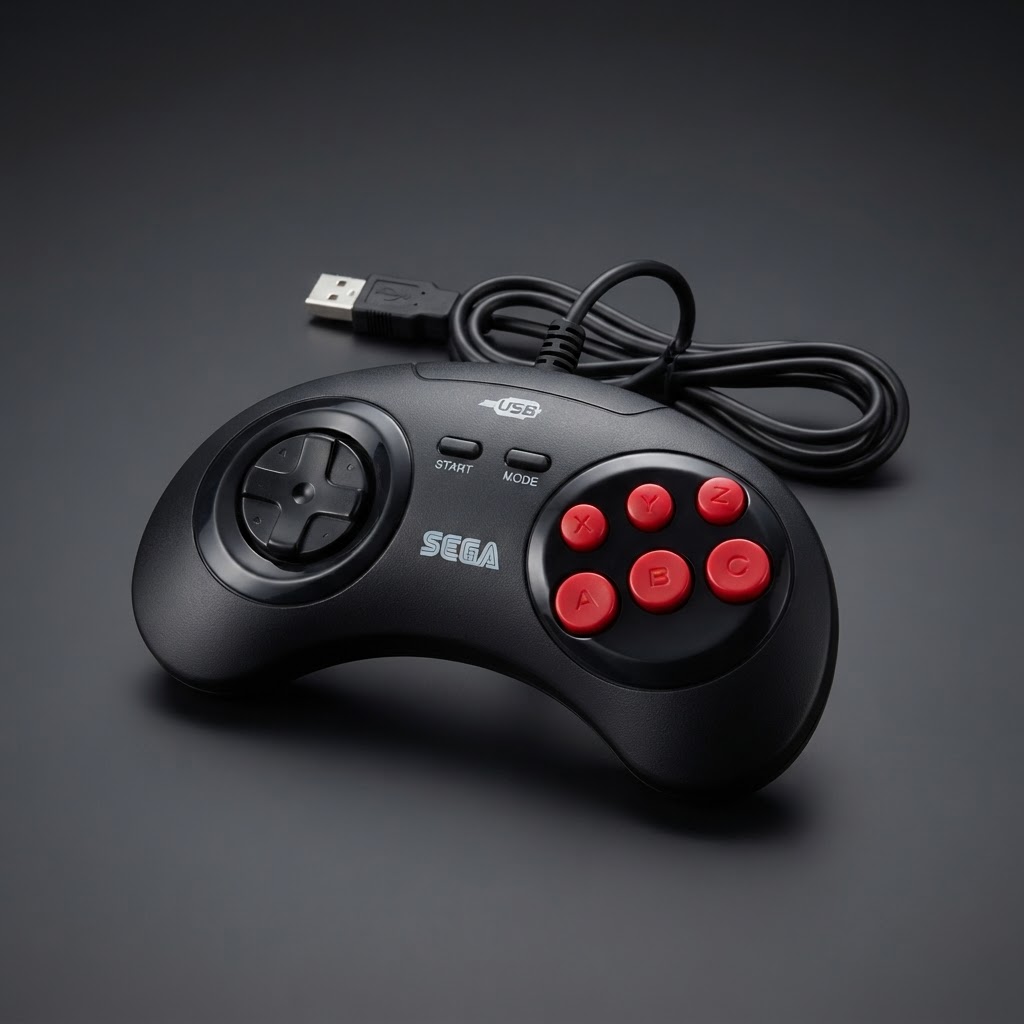
The Saturn's 3D Analog Pad and 6-button fighting pad are iconic. Original controllers in great condition are worth preserving, but practical alternatives exist.
- For fighting games, the original 6-button pad is irreplaceable—buy spares when you find them cheap.
- Controller Extension Cables are a must-have for couch co-op sessions; Saturn controllers have notoriously short cords.
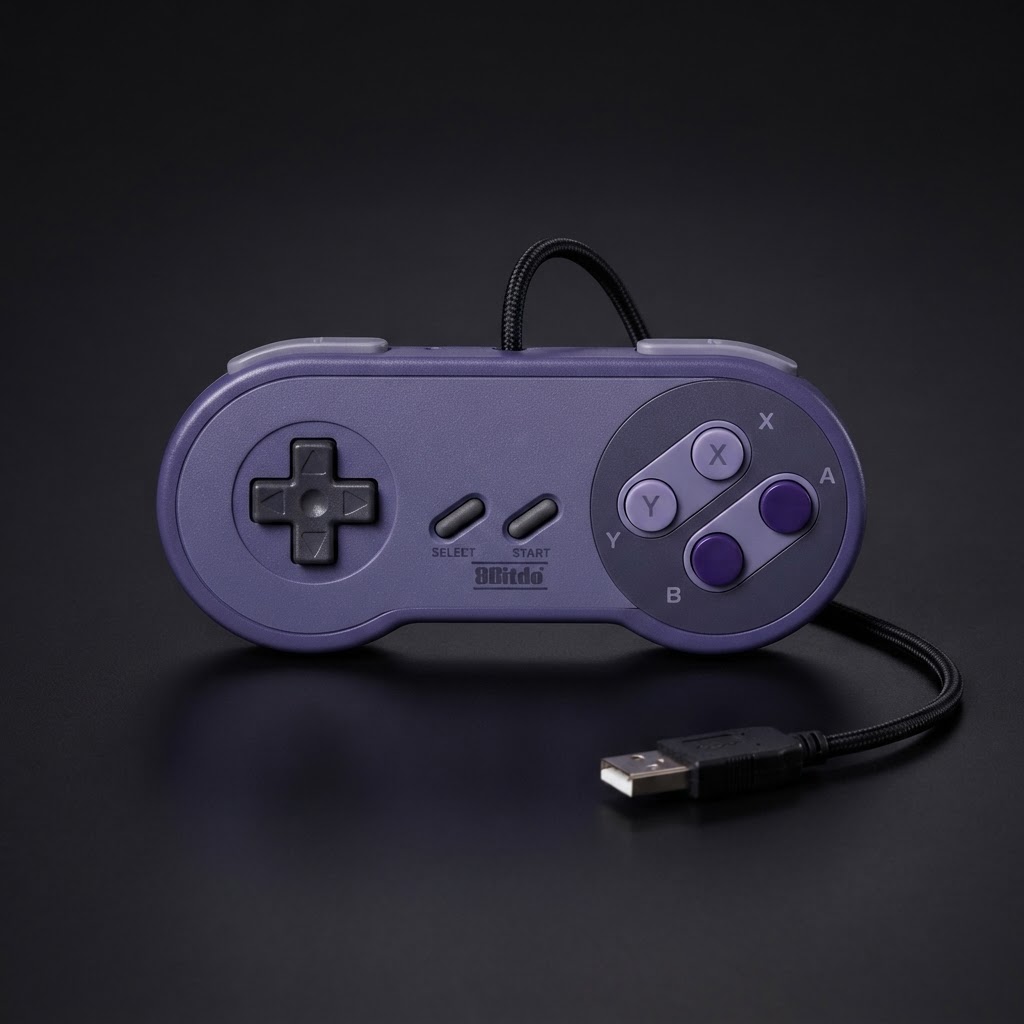
- USB adapters let you use original Saturn pads on PC emulators, while a Classic SNES-Style USB Controller works well as a budget stand-in for 2D platformers and RPGs.
Setting Up the Ultimate Saturn Gaming Room
Half the joy of collecting is creating a space that celebrates the hardware. A few targeted upgrades make a massive difference:
- Ambient lighting: LED Strip Lights for Gaming Room behind shelves give your Saturn and game cases dramatic backlighting that photographs beautifully.
- Wall décor: A Neon LED Arcade Marquee Sign adds authentic retro arcade energy to any dedicated gaming corner.
- Finishing touches: Retro Gaming Coasters Set and a Console-Themed Throw Pillow complete the aesthetic without breaking the budget—perfect gifts for fellow collectors too.
Essential Sega Saturn Games: Where to Start Collecting
| Title | Region | Avg. CIB Price | Why It Matters | |---|---|---|---| | Panzer Dragoon Saga | NA | $400–$700 | Greatest Saturn RPG | | Radiant Silvergun | JP | $60–$120 | Best shmup ever made | | Guardian Heroes | NA | $80–$130 | Defining beat-em-up | | Virtua Fighter 2 | NA/JP | $10–$20 | Landmark 3D fighter | | Dragon Force | NA | $100–$180 | Underrated strategy-RPG | | Burning Rangers | JP | $40–$80 | Sonic Team's hidden gem |
Conclusion: Build Your Saturn Collection Strategically
The Sega Saturn rewards patient, strategic collectors more than almost any other retro platform. Start with a region-modded console or a Japanese unit, pair it with an ODE for deep-catalog access, invest in proper display hardware, and prioritize physical copies of the titles that matter most to you. The library is extraordinary—and the community around it is equally passionate.
Ready to upgrade your display setup and get the most out of every Saturn game you own? The RetroTINK 4K Video Upscaler is the single best investment a serious Saturn collector can make in 2024. Don't let those gorgeous sprite-based masterpieces look anything less than their absolute best.