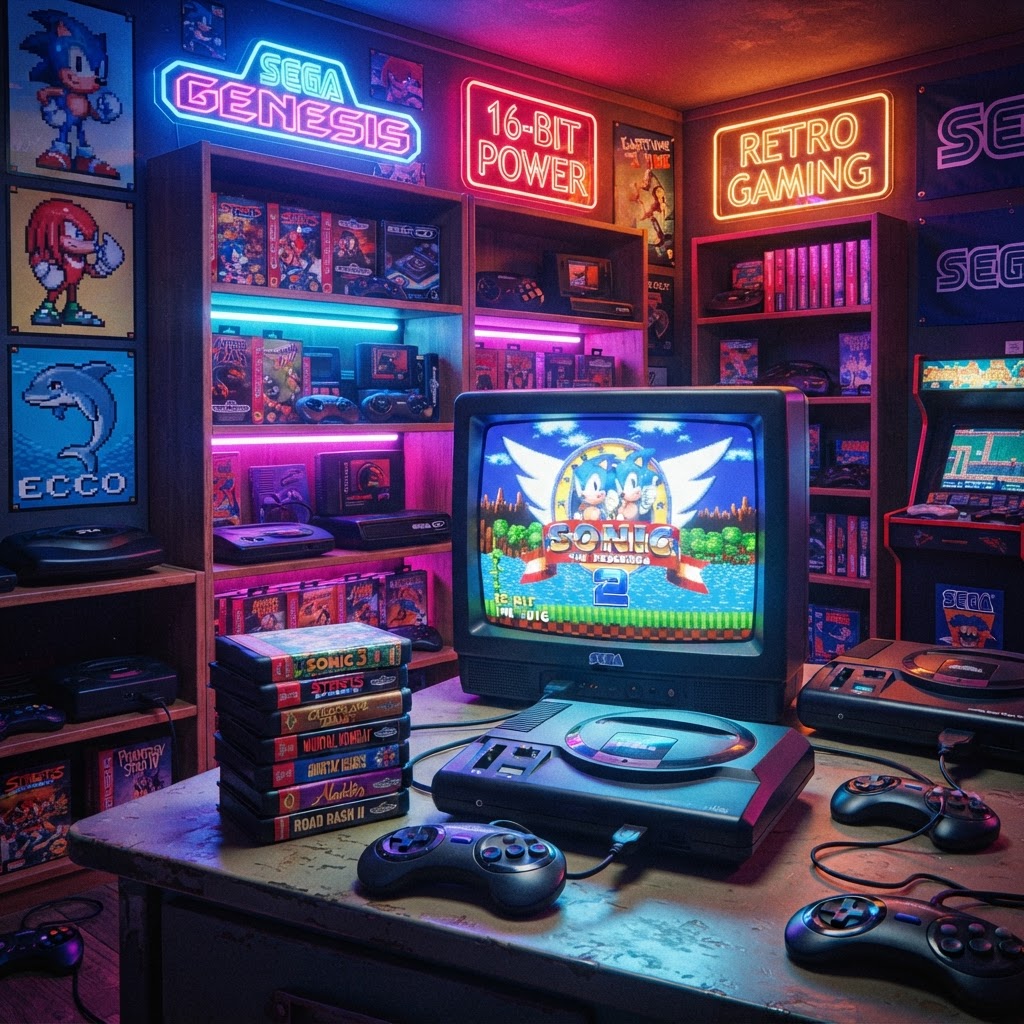
Sega Genesis Collecting: What Every Fan Needs
Few gaming consoles have left a mark on pop culture quite like the Sega Genesis — or the Mega Drive, as it was known outside North America. Released in 1989, Sega's 16-bit powerhouse didn't just compete with Nintendo's Super NES; it carved out its own identity with a harder-edged attitude, a blazing blast processor, and a library that remains genuinely thrilling to explore decades later. From the moment Sonic the Hedgehog launched in 1991 and redefined what a platform mascot could be, the Genesis declared itself a serious force in the console wars.
What makes the Genesis so compelling to collect today isn't just nostalgia — it's the sheer quality and variety of its software library. Beat-em-ups, RPGs, shoot-em-ups, sports titles, and action games all found a home on the platform, and many of them still hold up remarkably well. Whether you grew up trading quarters in arcades and rushing home to play Streets of Rage 2 on a Saturday morning, or you're discovering the library for the very first time, the Genesis offers something rare: a collection of games that reward exploration and deliver genuine excitement without a single frame of irony.
This guide is designed for anyone ready to dive into Genesis collecting seriously. We'll walk you through choosing the right hardware, building a worthwhile game library, getting the best picture quality on a modern TV, caring for your cartridges, and displaying your collection with pride. Let's blast through it.
Choosing the Right Console Hardware
The Genesis went through several hardware revisions during its lifespan, and each revision has its own strengths and weaknesses. Understanding the differences will save you money and frustration.
Model 1 vs. Model 2 vs. Model 3
- Genesis Model 1 (1989–1993): The original design with the high-button headphone jack on the front and volume slider. Many collectors prefer this model because it uses a discrete YM2612 sound chip that produces a warmer, more nuanced audio output. Look for the "High Definition Graphics" label on the cartridge slot. The downside? It runs hotter and is generally more expensive to find in good condition.
- Genesis Model 2 (1993–1998): Slimmer, cheaper to find, and very reliable. The sound chip was revised to a cost-reduced version that some audiophiles feel sounds slightly thinner, but the difference is subtle on most setups. The Model 2 outputs a cleaner RGB signal, which matters a great deal if you're planning to use a high-quality upscaler.
- Genesis Model 3 (1998): The budget-friendly swan song. It lacks the expansion port used by accessories like the 32X and Sega CD, and the audio output is noticeably inferior. Avoid this one unless it's all you can find and you're on an extremely tight budget.
What to Look For When Buying
When hunting for a Genesis at a flea market, thrift store, or online marketplace, keep these points in mind:
- Check the cartridge slot for bent or missing pins. This is the most common hardware failure and can often be repaired, but factor it into pricing.
- Inspect the shell for yellowing (known as "retrobrightening" candidates) or deep scratches. Yellowing is cosmetic and reversible; deep cracks are more serious.
- Power on the unit before buying if at all possible. A clean boot screen with crisp audio is a good sign.
- Verify the model number on the bottom label. The exact model (MK-1601, MK-1631, etc.) will help you research compatibility with accessories.
- Test the expansion port if you plan to add a Sega CD or 32X down the road — only Models 1 and 2 support these.
- Ask if original power supply and AV cables are included. Replacements are easy to find, but it's always nice to have the originals.
Building Your Game Library
The Genesis library sits at roughly 900 licensed titles for North America, with even more available across the Japanese and European catalogs. The good news: most of the absolute best games are still reasonably priced. The not-so-good news: a handful of titles have become genuinely expensive, so knowing what to prioritize matters.
The Non-Negotiable Essentials
- Sonic the Hedgehog and Sonic the Hedgehog 2 — The speed, the attitude, the music. These are the console's defining titles and they still feel extraordinary.
- Streets of Rage 2 — Arguably the greatest beat-em-up ever made. The soundtrack by Yuzo Koshiro alone makes this a must-own.
- Phantasy Star IV: The End of the Millennium — A genuinely epic JRPG with a cinematic manga panel presentation and one of the best soundtracks on the platform. Track this one down.
- Gunstar Heroes — Treasure's explosive run-and-gun masterpiece. Fast, chaotic, and beautiful.
- Comix Zone — Underrated gem with a brilliant concept: you fight through a comic book. Brilliant art direction.
- Mortal Kombat II — The Genesis version had the blood code from the start, which matters more than you'd think historically.
- Contra: Hard Corps — Harder than any game has a right to be, and absolutely relentless fun for it.
- Ecco the Dolphin — Atmospheric, strange, and unforgettable. Nothing else on the system feels like it.
Hidden Gems Worth Chasing
- Rocket Knight Adventures — A forgotten Konami classic with gorgeous animation.
- Castlevania: Bloodlines — The only mainline Castlevania on Genesis, and a spectacular one.
- Beyond Oasis — An action RPG that feels like a love letter to Zelda: A Link to the Past.
- Target Earth — A punishing mech shooter that rewards patience.
Cartridge Authenticity
Bootleg cartridges are increasingly common. A game cartridge cleaning kit is an absolute essential for any collector, not just for maintenance but for inspecting cartridge labels and board markings before you clean and test an unknown cart. Authentic Genesis cartridges use specific PCB markings and label printing techniques. Bootlegs often feel lighter, have fuzzy label printing, and lack proper board markings inside.
Controllers: The Feel of the Fight
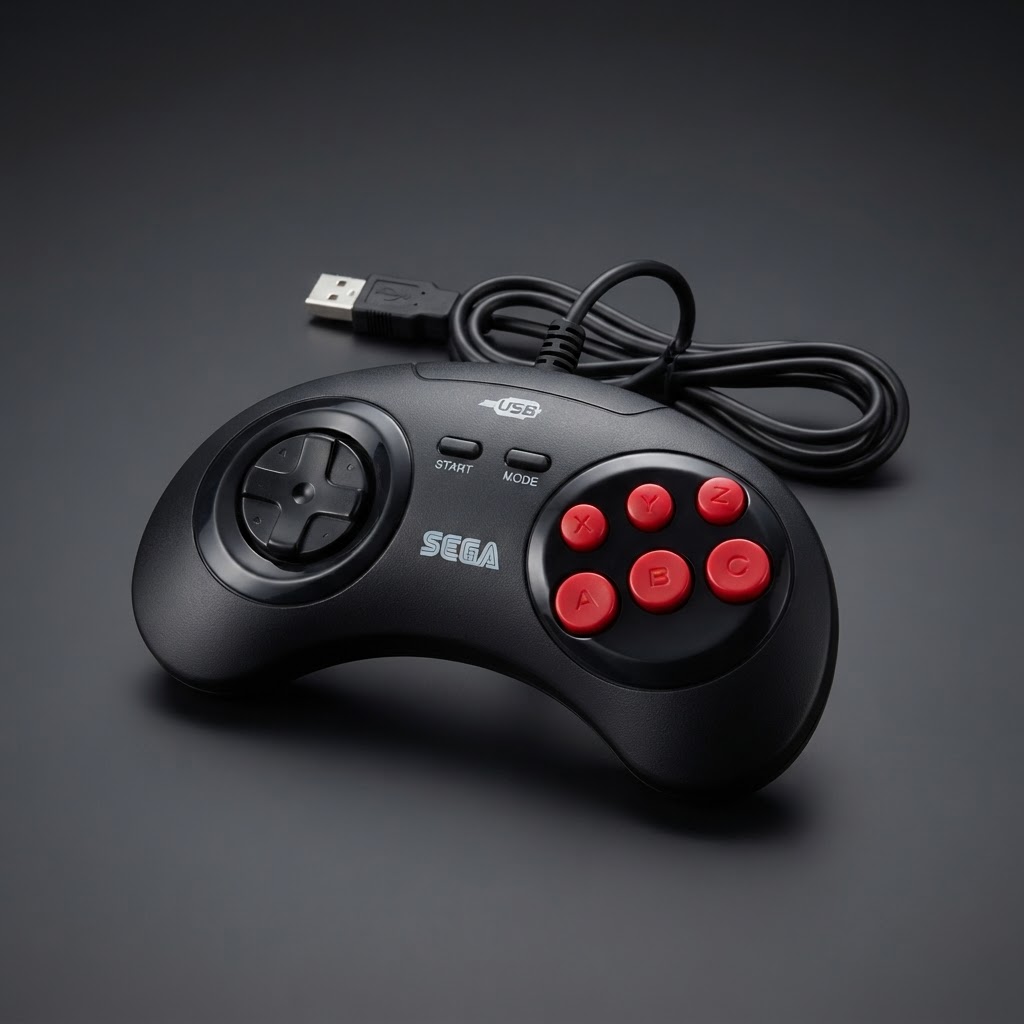
The controller experience on Genesis is central to why the platform still feels great today. The original three-button pad is clean and responsive, but the six-button controller introduced for Street Fighter II Championship Edition is one of the finest controllers ever designed.
Original Hardware Controllers
- Three-button pad (Model 1601-05): The classic. Comfortable D-pad, crisp buttons. Perfectly adequate for most games.
- Six-button pad (1993 revision): Essential for fighting games. The added X, Y, and Z buttons open up a wider range of genre compatibility.
When buying original controllers, check for fraying cables near the connector end — this is the most common failure point — and test every button for responsiveness.
Modern Alternatives
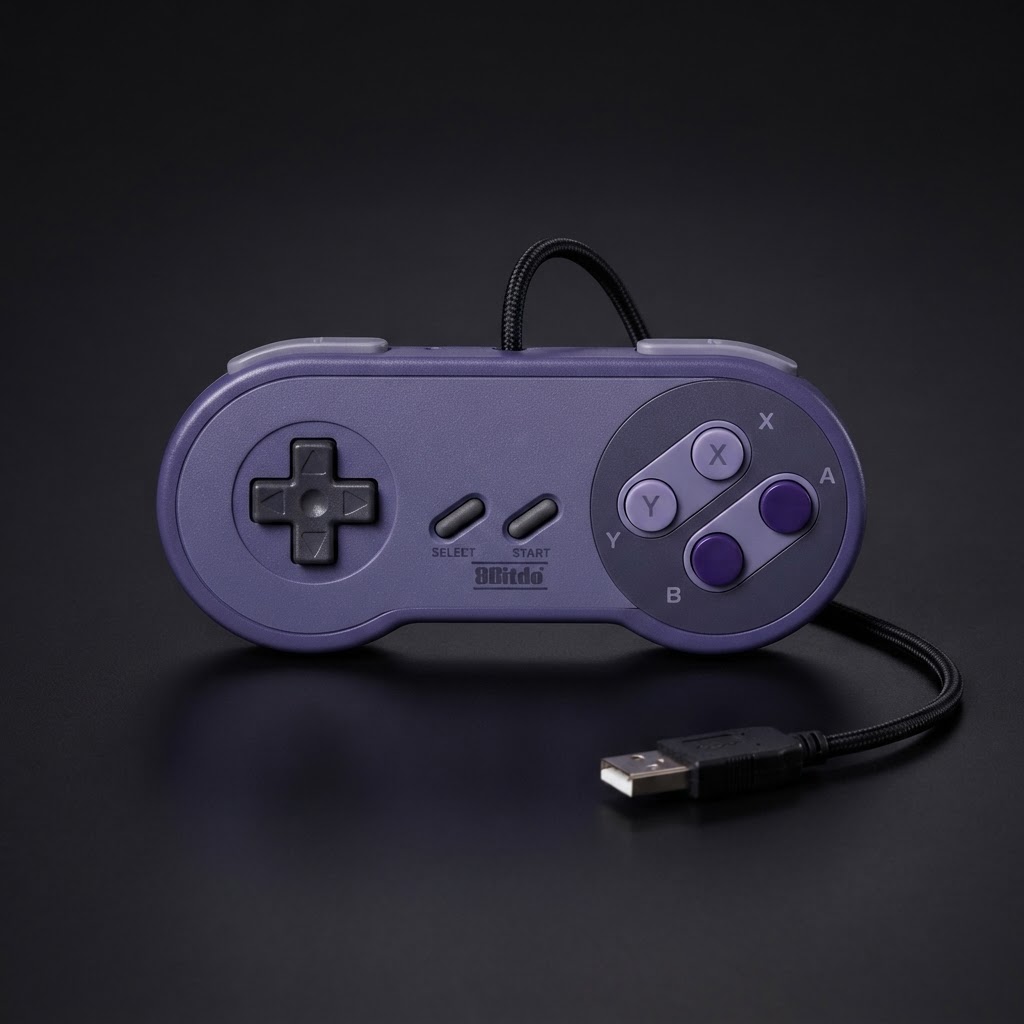
If you want to play Genesis games on a modern PC, Mac, or even with emulators on a streaming box, a Sega Genesis style USB controller delivers authentic feel without the analog output concerns. Several manufacturers produce excellent six-button replicas that feel nearly identical to the originals.
For collectors who enjoy the arcade-style experience, a retro arcade joystick compatible with the Genesis's standard 9-pin DE-9 connector can transform how you play titles like Golden Axe or Altered Beast. The DB9 standard means many arcade sticks work directly with the original hardware.
AV Output and Display Options
This is where modern Genesis collecting gets technical — and where the difference between a mediocre and genuinely great experience lives.
Understanding Your Options
The Genesis supports several video output modes depending on the cable you use:
- RF (coaxial): Worst quality. Blurry, noisy, avoid if possible.
- Composite: Acceptable for casual play, but lacks sharpness and introduces color bleeding.
- S-Video: A solid middle ground available on Model 1 consoles.
- RGB (via SCART): The best native output. Crystal-clear, vibrant, and faithful to how developers intended the games to look.
Getting RGB on a Modern TV
Most modern televisions don't accept SCART input directly, which is where an upscaler or converter enters the picture. A quality retro console HDMI converter can take the Genesis's RGB signal and output it cleanly to a modern HDMI display. For the best results, look for converters that support line doubling and scanline filters — these help preserve the aesthetic of CRT gaming without requiring a bulky vintage television.
The gold standard for serious collectors is the OSSC (Open Source Scan Converter) or the Retrotink 5X, both of which handle the Genesis beautifully. They're pricier investments, but if you care about picture quality, they're worth every cent.
Care and Maintenance
A Genesis collection is an investment, and treating it like one pays dividends over time.
Cleaning Your Cartridges
Over time, cartridge contacts oxidize and collect dust, causing read errors or graphical glitches. Regular cleaning with a game cartridge cleaning kit — ideally using isopropyl alcohol at 90% concentration or higher and quality foam swabs — will keep your games running reliably for decades. Never use WD-40 or compressed air inside cartridge slots.
Console Maintenance
- Dust the cartridge slot regularly with a soft brush.
- Re-cap the board if you notice audio or video degradation — aging capacitors are the most common cause of Genesis hardware failure.
- Store cartridges upright in a cool, dry environment away from direct sunlight, which yellows labels.
- Use dust covers over the cartridge slot when the console is idle.
Displaying Your Collection
Half the joy of physical collecting is showing it off. A thoughtful display setup transforms a pile of cartridges into a proper shrine.
An RGB LED console display stand can give your Genesis setup a dramatic presentation — whether on a dedicated shelf, in a gaming room, or as a centerpiece in a home office. The soft ambient lighting emphasizes the console's angular industrial design in ways standard shelf lighting simply can't match. Pair your console display with wall-mounted cartridge shelves or acrylic cases for individual showpiece titles like Phantasy Star IV or Comix Zone, and you've got a setup that makes visitors stop and stare.
Final Thoughts
The Sega Genesis remains one of the most rewarding consoles to collect, full stop. Its library is enormous, its hardware is durable when cared for properly, and the cultural footprint it left on gaming is undeniable. Whether you're chasing the complete licensed library, building a tight selection of absolute classics, or simply trying to relive childhood afternoons blasting through Sonic 2's Chemical Plant Zone, the Genesis delivers.
Start smart: find a clean Model 1 or Model 2 in good condition, grab a six-button controller, invest in a decent HDMI converter for your modern TV, and keep your cartridges clean. From there, let the library guide you. You'll quickly discover that the best thing about Sega Genesis collecting isn't arriving at a destination — it's the game-by-game journey of getting there.
Sega does what Nintendon't — and collecting it is absolutely worth your time.